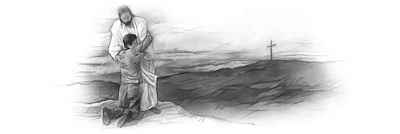
Read for This Week’s Study: Gal. 6:14; Rom. 6:23; 1 John 5:11, 13; Rom. 4:1–7; Lev. 7:18; Lev. 17:1–4; Rom. 5:1.
Memory Text: “But that no man is justified by the law in the sight of God, it is evident: for, The just shall live by faith” (Galatians 3:11).
About seven centuries before Christ, the poet Homer wrote The Odyssey, the story of Odysseus, the great warrior who—after sacking the city of Troy in the Trojan war—began a 10-year voyage to try to return to his native Ithaca. The voyage took so long because he faced shipwrecks, mutinies, storms, monsters, and other obstacles that kept him from reaching his goal. Finally, after deciding that Odysseus had suffered enough, the gods agreed to allow the weary warrior to return to his home and family. His trials were, they agreed, enough atonement for his mistakes.
In one sense, we are like Odysseus, on a long journey home. The crucial difference, however, is that unlike Odysseus, we can never “suffer enough” to earn our way back. The distance between heaven and earth is too great for us to atone for our mistakes. If we get home, it will have to be only by the grace of God.
The Week at a Glance: Why must salvation be a gift? Why could only Someone equal with God ransom our souls? What makes Abraham such a good representative of faith? What does it mean that righteousness is “imputed,” or “credited,” to us? How can we make the promises and hope found in the Cross our own?
* Study this week’s lesson to prepare for Sabbath, June 19. Sunday June 13
Reflections of Calvary
The Old Testament way of salvation under the Mosaic covenant is no different from the New Testament way of salvation under the new covenant. Whether in the Old or New Testament, old or new covenant, salvation is by faith alone. If it were by anything else, such as works, salvation would be something that was owed us, something the Creator was obligated to give us. Only those who do not understand the seriousness of sin could believe that God was under some obligation to save us. On the contrary, if anything, there was only one obligation, and that was what we owed to the violated law. We, of course, could not meet that obligation; fortunately, Jesus met it for us.
“When men and women can more fully comprehend the magnitude of the great sacrifice which was made by the Majesty of heaven in dying in man’s stead, then will the plan of salvation be magnified, and reflections of Calvary will awaken tender, sacred, and lively emotions in the Christian’s heart. Praises to God and the Lamb will be in their hearts and upon their lips. Pride and self-esteem cannot flourish in the hearts that keep fresh in memory the scenes of Calvary. . . . All the riches of the world are not of sufficient value to redeem one perishing soul. Who can measure the love Christ felt for a lost world as He hung upon the cross, suffering for the sins of guilty men? This love was immeasurable, infinite.
“Christ has shown that His love was stronger than death. He was accomplishing man’s salvation; and although He had the most fearful conflict with the powers of darkness, yet, amid it all, His love grew stronger and stronger. He endured the hiding of His Father’s countenance, until He was led to exclaim in the bitterness of His soul: ‘My God, My God, why hast Thou forsaken Me?’ His arm brought salvation. The price was paid to purchase the redemption of man, when, in the last soul struggle, the blessed words were uttered which seemed to resound through creation: ‘It is finished.’
“The scenes of Calvary call for the deepest emotion. Upon this subject you will be excusable if you manifest enthusiasm. That Christ, so excellent, so innocent, should suffer such a painful death, bearing the weight of the sins of the world, our thoughts and imaginations can never fully comprehend. The length, the breadth, the height, the depth, of such amazing love we cannot fathom. The contemplation of the matchless depths of a Saviour’s love should fill the mind, touch and melt the soul, refine and elevate the affections, and completely transform the whole character.”—Ellen G. White, Testimonies for the Church, vol. 2, p. 213.
Pray over what Ellen G. White wrote here. Keeping these lines in mind, read Galatians 6:14 and then ask yourself, In what ways can I glory in the cross of Christ?
Monday June 14
The Covenant and the Sacrifice
“You know that you were ransomed from the futile ways inherited from your fathers, not with perishable things such as silver or gold, but with the precious blood of Christ, like that of a lamb without blemish or spot” (1 Pet. 1:18, 19, RSV).
What does Peter mean here when he says that we were ransomed?
When Peter speaks about Christ’s atoning death on the cross, the “ransom” or price idea to which he refers brings to mind the ancient practice of a slave’s being freed from bondage after a price had been paid (often by a relative). In contrast, Christ ransomed us from the slavery of sin and its final fruit, which is death, but He did it with His “precious blood,” His substitutionary and voluntary death on Calvary. Again, this is the foundation of all the covenants: without it, the covenant becomes null and void, because God could not have justly fulfilled His end of the deal, which is the gift of eternal life bestowed upon all who believe.
Look up the following verses: Romans 6:23 and 1 John 5:11, 13. What message do they share?
We have this promise of eternal life, because Jesus alone could repair the breach that first caused us to lose that eternal life. How? Because the righteousness and infinite value of the Creator alone could cancel the debt we owed to the broken law—that is how wide the breach caused by sin was. After all, what would it say about the seriousness of God’s eternal moral law if some finite, temporal, and created being could pay the penalty for violating it? Only Someone who is equal to God Himself, in whom life exists unborrowed and underived and eternal, could have paid the ransom required to free us from the debt owed to the law. This is how all the covenant promises are fulfilled; this is how we have the promise of eternal life, even now; this is how we have been ransomed from sin and death.
Imagine that in an art museum, someone’s child throws a balloon filled with ink at a Rembrandt painting and ruins it completely. The painting is worth millions; the parents could not come close to paying the debt owed, even if they sold everything they owned. In what sense does this image help us understand just how serious a breach sin has caused, how helpless we are to fix it, and why only the Lord Himself could pay the debt?
Tuesday June 15
The Faith of Abraham: Part 1
“He believed in the Lord; and he counted it to him for righteousness” (Gen. 15:6).
This verse remains one of the most profound statements in all Scripture. It helps establish the crucial truth of biblical religion, that of justification by faith alone, and it does this long centuries before Paul wrote about it in Romans—all of which helps prove the point that from Eden onward, salvation always came the same way.
The immediate context of the verse helps us understand just how great Abram’s faith was, believing in God’s promise of a son despite all the physical evidence that would seem to make that promise impossible. It is the kind of faith that realizes its own utter helplessness, the kind of faith that demands a complete surrender of self, the kind of faith that requires a total submission to the Lord, the kind of faith that results in obedience. This was the faith of Abram, and it was counted to him “as righteousness.”
Why does the Bible say that it was “counted to” him, or “credited to” him, as righteousness? Was Abram himself “righteous” in the sense of God’s righteousness? What did he do, not long after God declared him righteous, that helps us understand why this righteousness was credited to him, as opposed to what he himself actually was?
However much Abram’s life was a life of faith and obedience, it was not a life of perfect faith and perfect obedience. At times he displayed weakness in both areas. (Does that sound like anyone you know?) All of which leads to the crucial point, and that is: the righteousness that saves us is a righteousness that is credited to us, a righteousness that is (to use a fancy theological term) imputed to us. This means that we are declared righteous in the sight of God, despite our faults; it means that the God of heaven views us as righteous even if we are not. This is how He saw Abram, and this is how He will see all who come to Him in “the faith of Abraham” (Rom. 4:16).
Read Romans 4:1–7. Look at the context in which Paul uses Genesis 15:6. Pray over those verses, and write out in your own words what you believe they are saying to you.
Wednesday June 16
The Faith of Abraham: Part 2
Looking again at Genesis 15:6, we can see that various translations have rendered the term as “counted” (Hebrew, chashab) or “reckoned” or “credited” (RSV, NIV) or “accounted.”
The same term is employed in other texts in the books of Moses. A person or a thing is “reckoned,” or “regarded,” as something that person or thing is not. For instance, in Genesis 31:15, Rachel and Leah affirm that their father “reckons” (“regards” or “counts”) them as strangers, although they are his daughters. The tithe of the Levite is “reckoned” (“regarded” or “counted”) as if it were the corn of the threshing floor, although it is obviously not the corn (Num. 18:27, 30, NIV).
How is the idea of reckoning expressed in the context of sacrifices? (Lev. 7:18, Lev. 17:1–4).
The King James Version uses the word “imputed” to translate chashab. If a particular sacrifice (“peace offering”) is not eaten by the third day, its value is lost, and it shall not be “reckoned” (Lev. 7:18, NASB; Hebrew, chashab) to the benefit of the offerer. Leviticus 7:18 speaks of a situation in which a sacrifice is “reckoned” to the benefit of the sinner (compare Lev. 17:1–4, NASB), who then stands before God in righteousness. God is accounting the sinner as righteous, although the individual is actually unrighteous.
Take some time to dwell on this wonderful truth that despite our faults, we can be accounted, or credited, as righteous in the sight of God. Write out in your own words your understanding of what this means.
This great truth, that of being declared righteous, not because of any act that we can do but only because of faith in what Christ has done for us, is the essence of the phrase “righteousness by faith.” Yet, it is not that our faith itself makes us righteous; rather, faith is the vehicle by which we obtain the gift of righteousness. This, in essence, is the beauty, the mystery, and the glory of Christianity. All that we believe as Christians, as followers of Christ, finds an important root in this wonderful concept. Through faith, we are accounted righteous in the sight of God. All else that follows—obedience, sanctification, holiness, character development, love—stems from this crucial truth.
How do you respond to someone who seeks to be a Christian yet says, “But I don’t feel righteous”?
Thursday June 17
Resting on the Promises
There is a story told about the famous Cardinal Bellarmine, the great Catholic apologist who all his life fought the message of justification by an imputed righteousness alone. As he lay dying, he was brought the crucifixes and the merits of the saints to help give him assurance before death. But Bellarmine said, “Take it away. I think it’s safer to trust in the merits of Christ.”
As they near the end of their lives, many people look back and see how vain, how futile, how useless, their deeds and their works are for earning salvation with a holy God, and thus how much they need the righteousness of Christ.
Yet, the good news is that we don’t have to wait for the approach of death to have security in the Lord. The whole covenant is based on the secure promises of God now, promises for us now, promises that can make our lives better now.
Look up the following verses, and answer the question asked with each one in the context of developing, keeping, and strengthening your covenant relationship with God:
Ps. 34:8 (How can you taste God’s goodness?)
Matt. 11:30 (What has Christ done for us that makes this yoke easy?)
Rom. 5:1 (What does justification have to do with peace?)
Phil. 2:7, 8 (What have you gained from Christ’s experience?)
Prayerfully examine your life, and ask yourself, What things am I doing that are strengthening my relationship with God, and what things are hurting it? What changes do I need to make?
Friday June 18
Further Thought: “The only way in which he [the sinner] can attain to righteousness is through faith. By faith he can bring to God the merits of Christ, and the Lord places the obedience of His Son to the sinner’s account. Christ’s righteousness is accepted in place of man’s failure, and God receives, pardons, justifies, the repentant, believing soul, treats him as though he were righteous, and loves him as He loves His Son. This is how faith is accounted righteousness; and the pardoned soul goes on from grace to grace, from light to greater light.”—Ellen G. White, Selected Messages, book 1, p. 367.
“When through repentance and faith we accept Christ as our Savior, the Lord pardons our sins, and remits the penalty prescribed for the transgression of the law. The sinner then stands before God as a just person; he is taken into favor with Heaven and through the Spirit has fellowship with the Father and the Son.
“Then there is yet another work to be accomplished, and this is of a progressive nature. The soul is to be sanctified through the truth. And this also is accomplished through faith. For it is only by the grace of Christ, which we receive through faith, that the character can be transformed.”—Ellen G. White, Selected Messages, book 3, p. 191.
Discussion Questions:
What distinction is made between a living and a dead faith (James 2:17, 18)? How does Paul describe a living faith (Rom. 16:26)? What is the key word that helps reveal what faith entails?
How do you respond to the argument (which comes with a certain logical consistency) that if we are saved only by a credited righteousness, not a righteousness that exists within us, then it does not matter what we do or how we act?
“Our acceptance with God is sure only through His beloved Son, and good works are but the result of the working of His sinpardoning love. They are no credit to us, and we have nothing accorded to us for our good works by which we may claim a part in the salvation of our souls. . . . He [the believer] cannot present his good works as a plea for the salvation of his soul.”—Ellen G. White, Selected Messages, book 3, p. 199. Keeping this statement by Ellen G. White in mind, why, then, are good works such a crucial part of the Christian experience?
Summary: Old covenant, new covenant: Jesus paid the debt owed to the law, so that we can stand righteous in the sight of God.
Story inside
Weekly Trip to Mission Field
By Andrew McChesney, Adventist Mission
Some children in the U.S. state of Texas don’t just listen to the mission story. They also fly to faraway countries to experience the story firsthand.
On Sabbaths, the children check in at Missionary Airlines when they arrive for Sabbath School at the Grandview Seventh-day Adventist Church. Each child presents a passport—marked “Grandview Sabbath School Passport”—at the airline’s check-in desk to receive a visa for the destination country. On one Sabbath, a visitor from Adventist Mission had prepared a mission story from China, so the airline representative—primary teacher Luly Wicklund—stuck a home-printed sticker of the red Chinese flag into each passport. Each child also can receive up to three stars in the passport: for showing up on time, for bringing a Bible, and for inviting a friend.
The first 10 children who arrive on time are issued first-class boarding passes, which allows them to choose their seats in an airplane in the next room. Late arrivals receive economy boarding passes with assigned seating. The children also have frequent-flyer cards with memory verses on the back. The plane, constructed by church members, consists of a metal and wooden frame covered with white canvas. Oval windows line the sides of the fuselage.
Once the children are seated, Luly plays a recorded message. “Thank you for choosing Missionary Airlines, where a new adventure awaits you every Sabbath!” says the male voice of the plane’s captain. “Please remain in your seats as one of your attendants has prayer before our flight departs.”
After the announcement one Sabbath, Luly asked the 11 children onboard for their prayer requests. A boy pointed to a gaping hole at the back of the plane and exclaimed, “Let’s pray that we’re not sucked out of this plane during the flight.” After the other children laughed, the boy added seriously, “Please pray for my dog. She isn’t feeling well.” Then the plane took off for China.
Upon landing, the children exited the plane and sat in nearby chairs to listen to the mission story from China. Afterward, they flew back to Texas. During the return flight, the teacher asked quiz questions about the mission story.
Luly, who developed Missionary Airlines at the suggestion of her 11-yearold son more than a decade ago, said she has found it useful to develop a Sabbath School theme each quarter and to make mission stories part of that theme. Previous themes have included a submarine, a cave, and a rocket that took children around the world. Luly said the trips personalize the mission stories.
“Children see that these are normal people who go to these places,” she said—normal people used by God.
teachers comments
Study Focus: Galatians 3:11
Part I: Overview
No matter what we do, our human nature is sinful and unworthy in comparison to the purity of God’s righteousness. By accepting Christ’s substitutionary death for us through the covenant, we can stand worthy in the sight of God. And however much God cleanses us, changes us, molds us into reflections of His image, we must always have Jesus as our perfect Substitute. This is the essence of the gospel and our great hope, our covenantal hope.
Part II: Commentary
Before the new covenant could be ratified, blood had to be shed. Hence, as had been etched and foretold in the archives of Messianic prophecies, that life-giving blood, which streamed from Calvary, validated the new covenant.
Reflections on Calvary
We do need divine grace to cleanse us, to deliver us from our own presumptuousness, and to free us from the inherent sinfulness that, though all but wired into us, does not need to dominate us. And who doesn’t long to be freed from the petty jealousies, the envies, the bitterness and anger and guilt-causing deviousness inherent in us all? All this, and more, is what God will do for His covenant people, if they would but abide by the covenant and rest in Him and His promises.
“Their plight is serious indeed. They cannot cleanse themselves of sin (Prov. 20:9), and no deeds of law will ever enable them to stand before God justified (Rom. 3:20; Gal. 2:16). Hence the atonement, to accomplish for sinners what needed to be done, had to be made by someone else in their behalf. Christ is utter self-giving, even in death. He is the means of our return to God. Through Him we have access to the Father (Eph. 2:18), an access to be appropriated by faith (Eph. 3:12), faith in Him ‘whom God put forward as an expiation by his blood, to be received by faith’ (Rom. 3:25).”—Raoul Dederen, “Christ: His Person and Work,” in Handbook of Seventh-day Adventist Theology (Hagerstown, MD: Review and Herald® Publishing Association, 2000), pp. 174, 175.
The Faith of Abraham: Part 1
How amazing that the Old Testament, often viewed as the ultimate example of what legalism is all about, is really the foundational expression of the covenant promise of salvation by faith. Back in Genesis 15:6, we can see this in the famous verse: “And he believed in the Lord, and He accounted it to him for righteousness” (NKJV). This, of course, in talking about Abram (not yet Abraham). The Hebrew is clear: Abram believed “in” the Lord; that is, he not only believed that He existed, but he also believed His promises, even the ones that seemed impossible, such as that he would one day father a great nation.
What about other promises of God that seem impossible? Such as that we, though sinners, can be accounted righteous, and even made righteous, in His sight? Talk about belief in the impossible!
The Faith of Abraham: Part 2
“Faith eats her manna and leaves not a morsel for worms to breed in. . . . “The faith of Abraham could lead strings of camels and flocks of sheep away from Haran to Canaan. His was the faith which could drive the tentpin into a foreign soil, or roll up the canvas. . . .
“It is a practical, active, living, week-day, every-day faith. I will speak very broadly and plainly, and say we need a bread-and-cheese faith, . . . a faith which believes that God who feeds the ravens will send us our daily bread; a faith . . . that . . . does not live in the region of fiction.”—Charles Spurgeon, “Hearken and Look,” Spurgeon’s Expository Encyclopedia, vols. 1, 2 (Grand Rapids, MI: Baker Books, 1996), pp. 43, 47, 48. (See Isa. 51:2.)
Resting on the Promises
“How can Divinity risk so much in behalf of humanity? How can God declare completeness (perfection) for people who, though in process, have not fully attained? How can He declare as accepted persons who by nature are unacceptable? How can the Godhead risk Their reputation by extending such daring grace?
“The answer is threefold.
“First, God does so because He accepts our sincere prayers and efforts toward spiritual maturity as perfection. . . .
“Second, Christ is able to take such action because the faith that He sees in us is not really ours; it is His. He sees His faith in us and honors that faith. It is ours in that we are the repositories of His love, the objects of His grace. But it is His because saving faith is of divine, not human, origin. . . .
“Third, God acts with such confidence because in the final analysis it is not on us that the Father focuses; it is on the righteousness of Christ’s robe that covers us.”—Calvin Rock, Seeing Christ: Windows on His Saving Grace, pp. 158, 159.
Part III: Life Application
For Reflection: Are you saved? To answer this question, it is important to understand what salvation is. Salvation is a noun that suggests action. To save is the root, which is a verb. What action is involved in salvation?
Different faiths view salvation in different ways. The Baptists place salvation in the past. It is an event that took place at the cross. All sins were forgiven at that point. People who believe in predestination put salvation at the “Holy Council,” where certain people were appointed to be saved or lost. Roman Catholics place salvation in the future, after a person who dies believing in Jesus is purified in purgatory. These are punctiliar views of salvation, meaning that salvation takes place at one point in time.
Seventh-day Adventists, however, have a linear view of salvation. Salvation has a past, present, and a future. It is a process—a series of divine acts and human responses.
God knew from the beginning that Adam and Eve would reject Him. He created them with free will—the ability to choose between right and wrong. He assumed responsibility for rectifying the sin that they had brought. Jesus stepped forward and said, I will experience the second death in their place.
God established a covenant with His people and never changed the conditions of that covenant. All interactions between God and His people were established in the covenant. God illustrated the plan of salvation through the sanctuary services and, ultimately, through Jesus’ sacrifice.
The most significant contribution we can give to the world right now is to share with others who Jesus is, what He has done, what He is doing, and what He will do. He is not on holiday or taking a 15-minute break. Right now is the most pivotal point in our salvation.
What does salvation mean to you? What will your answer be when someone asks if you are saved?
1. Ask people in the class to respond to the question, Are you saved? Discuss the various answers and what they reveal about how we, as church members, understand the plan of salvation and how it works. Why do Adventists seem to struggle with that question?
2. Ellen G. White has said that God loves each of us as if each individual were the only human being alive. What does that teach us about God’s love? Dwell on the implications of this idea and why it is so hopeful.
3. A fundamental thought of some of the people in Christ’s day was that a person must “earn” God’s favor. A fundamental thought of Christians is that all a person can do is take God at His word. Considering the difference between these two thoughts, why do you think Paul used Abraham as the greatest example of faith (see Rom. 4:1–8)?
4. Thursday’s study tells us that when people review their life before they die, they see how vain and futile their deeds were in earning salvation. What are the elements of life that make us feel as though we have to depend on ourselves more than on anyone or anything else? What can we do to live a life that says “Jesus is in control”? How does your spiritual life reflect who/what is in control?
5. “God does not give us up because of our sins. We may make mistakes and grieve His Spirit, but when we repent and come to Him with contrite hearts, He will not turn us away. There are hindrances to be removed. Wrong feelings have been cherished, and there have been pride, self-sufficiency, impatience, and murmurings. All these separate us from God. Sins must be confessed; there must be a deeper work of grace in the heart. Those who feel weak and discouraged may become strong men of God and do noble work for the Master.”—Ellen G. White, Faith and Works, p. 35. How can we learn to live by these words?
6. We have all felt the rejection and pain of a broken promise. The Bible, however, is full of promises we can count on 100 percent. Yet, we are the ones who, in disobedience, step out of our covenant relationship. Having known the pain of broken relationships, what can we do to ensure we do not take for granted our covenant relationship with God?
7. Jesus sacrificed Himself because we owed a debt we had no way of repaying. Why could God not simply forgive the debt? If God could not do this, does it mean that He is somehow subject to His own law?
8. In 1 Peter 1:18, 19, the author writes that Christ’s blood “ransomed” readers from “the futile ways inherited from [their] forefathers” (ESV). Was he writing strictly about redemption from future punishment? Or was he also referring to the impact of this fact on the lives that his readers were living currently? Discuss.
9. Genesis 15:6 states that Abram’s belief in the Lord was counted as righteousness. Today most people associate faith or belief with assent to a list of doctrines or propositions. Is this what is referred to here? Why, or why not? If not, what part do the “right” beliefs about God play in our relationship to God?
KAMNGAH: “Upna hangin Pasian tawh akipawltheitebek nungta ding hi. Thukham hangin kuamah in Pasian tawh kipawltheihna angahlohnathu teltakin hong kilang hi” (Galati 3:11.) Khazih Pianma kum 700 kiimlai in, laguiphuakpa Homer in Odyssey akici, galsim hatpa Odysseustangthu, Trojan gallai in Troy khua asimkhit ciangin, apianna gam Ithacaah ciahkikna ding kumsawm a sawt khualzinna tangthu ahi hi. A lampi saulua mahmah ahihmanin, tembaw kisiatna, lehdona, huihpi, sapigilo leh adang haksatna tampi in alampipan hongkhak in nawngkai sak hi. Atawpna ah Odysseus in thuaksialuata ci in, pasiante in, ama innkuanpihte kiangah tungsak ta uhhi. Ama’mawhnate adingin a thuaksiatna kicing mahmah talel e ci uhhi.
Odysseus mahbangin, eite zong innlamzuan in khualsaupi i zin hi. Athupipen khatin, eite Odysseus tawh i kibatlohna in, i lampi zanna dingin “thuaksiatna kicing” ngeilo hi. I mawhna teng kithoih na’ngin, khualzin na’ng vantung leh leitung kikalpen gamlalua hi. Inn i tunleh, Pasian’ hong hehpihna hangbekmah hiding hi.
Tukal Enpak:Banghangin hotkhiatna hongpiakhong hiam? Banghangin Pasian tawh kikimpa bekin hong honkhiathei sese hiam? Upna ettehhuaipa Abraham khawng e leh bangci? Dikna pen hong “kithun” ahihkeileh, hong “kipia” cihin bang cinuam hiam? Eima singlamteh sung ah koibangin kamciam leh lam-etna i neithei ding hiam?
SUNDAY June 13
CALVARY KAWKNATE
Laisiangtholui hunlai, Moses thuciamna sunga hotkhiatna leh laisiangthothak sunga thuciamthak hotkhiatna in kilamdanna neituanlo hi. Laisiangtho lui maw thak ahi a, thuciam lui maw thak tepen, upna hangbekin hotkhiatna ahi hi. Thudangdang, sepna khawngpeuh tawh hileh, hotkhiatna pen, Piangsakpa in hongpiakloh phamawh, eima thalawhtawm hilel ding hi. Mawhna asiat-huaina atel mellote khawng bekin, Pasian in hong guploh phamawh hi e ciding uhhi. Tua bang hivetlo, eimah in thukham palsatnaabaa i hizawsop hi. Eima leibaa lohzolo i hihmanin; eite aiawh in Zeisu in hong lohsak hi.
“Vantung Mangpipa tanghial in mihing’dinmun aiawh hongsih theihna, mihingte in a telphat uh ciangin, hotkhiatna hong tangzai ding a, Calvary akawkte in, Christian lungtang sungah lungnemna, sianthona leh lawpna hong guansak ding hi. Pasian leh Tuuno pahtawinate in amau’ lungtang sungleh amuukte ah dim ding hi. Calvary phawkna anei mite’ lungtang sungah, kiliansak in kiphatsakna cihbang omngeilo hi. Kha mangthangkhat tatna dingin i leitung hauhna khempeuh zong kicing zolo hi. Mawhnei mi adingin singlamteh tungah khaina athuakngampa Khazih hong itna peuhmah akua in tehzo ding hiam? Hih itna in tehphaklo, tawpngeilo hi.”
“Khazih in ahong itna pen sihna sangin khauhzaw ahihna hong lakkhin hi. Mi hotkhiat na’ng a nasep khinzo hi. Alauhuaipenpen khuamial ukte vangliatna zong nawklai ding himah taleh hong itna in khangsemsem hi. A Pa’maitang seelna zong thuakzo a, a Kha gimlua ahih manin, ‘Ka Pasian, Ka Pasian aw, banghangin hong nusia nahiam’ ci in tau hi. Akhutin hotkhiatna hongpuak hi. Mihing kitatna’ng manteng hongpiaksak a, a Kha’ gimtawpna ah, a piansaksate ading thupha kammal ahi ‘A zozo hi’ ci in kiko hi.”
“Calvary phawkna in i diipngek hong bun hi. Hihthute hangin lawpna naneihzawh leh mawh maisakhuai nahi ta hi. Khazih, ahoihpenpa, mawhbaanglopa in thuaksia in si, leitung mawhna puakhia, cihpen ngaisut phakzawhloh thute ahi hi. Hong itna asauna, azaina, asanna, athukna cihte kuamahin tehzolo hi. Athuk mahmah Honkhiapa hong itna hoihtakin ngaihsun inla, nalungsim dimsak lecin, nakha hong tuisak ding a, nang itna hong puahphatsak in sangsak ding a, napumpi buppi hong bawlthaksak ding hi.”—Ellen G. White, Testimonies for the Church, vol. 2, pp. 212, 213.
EGWhite kammalte hangin thungenin. Na lungsim sungah tengsak inla, Galati 6:14zong simin, Khazih singlamteh sungah koibangin vanglian theiding cih zong in.
MONDAY June 14
THUCIAMNA LEHBIAKPIAKNA
“Napu napate uh nuntakzia bangmahin akimanglo nuntakna panin hong suahtaksaknadingin, Pasianin note’mandingin apiakpen, aman akiamthei ngun leh kham bang hilo a, tuuno bangin paubaanna aomlo amanpha mahmah Khazih, biakna in hong kipiakna tawh Pasian in note hong suaktasak hi.” 1Pet. 1:18, 19.
Peter in hong kilei acihpen bang acihnopna hiam?
Peter in singlamteh tunga Khazihin sihna tawh hongthoih a, “tan” acihciangin, tanglai in sal suahtakna dingin, tanaute in man piaksak cih i phawkkul hi. Tua mahbangin, eite’mawhna leh athaman panin Khazih in Calvary ah eite aiawh sihna leh a “sisan manpha” tawh hongtan hi. Hihte khempeuh in thuciamna tawphahte vive hi uh a: tuate lotawh, thuciamna in amawkna ahi hi. Pasian in tuate lotawh hongtatna a deihna bulpi picing saklo a, tua abulpi in, tawntung nuntakna ahi hi.
I taankhitsa tawntung nuntaknapen Zeisu bekmah in hong puahphatsak kikthei hi. Abeitheilo dikna tawh akidim Piangsakpa bekin eite’thukham palsatna leibaa hong loh sakthei hi. Tua pen mawhna hangin i palsatna zaimahmah cihna ahi hi. Tua hi a, mongneilel, akiplo piansak mite in eite mawhna thaman hong piaksakthei peuhmah leh, Pasian’thukham a phatmawh zia bangzah hilel ding hiam? Pasian tawh a kikim, kawmtawm ahilo nuntakna neidenpa, tuapa bekmahin, eite’thukham palsatna pan tatkikna’ng hong kituk leibaa hong lohsak thei hi. Hici bang tawh thuciamna kamciamte picing uh a; tumahmah in tawntung nunna kamciam hong neisak; mawhna leh sihna panin hong tankhia hi.
Naupang khatin, limsuaihte lakna innpi sungah, laitui adim mutpuakkhat lawnin kitamsak in, lim kisuaite kisiasak gawp ding cini. Tua limte in awntampi man hi; a PaNu in aneihsa khempeuh a zuak zongin tua leibaa naihzo nailo ding hi. Hihthu nangaihsut ciangin, mawhna hangin kilemlohna bangzahin siahuai hiam cih nangaihsun thei hiam? Koibangin kilemkik thei ding a, banghangin Topa bekin tua leibaa lohzo bekthei hiam?
TUESDAY June 15
ABRAHAM’ UPNA: Khen 1
“Amahin Topa muanghi; tua ahihmanin a hiding bangin gamta hi ci in Topain ciamteh hi.” Piancil 15:6. Hihmunpen laisiangtho buppi ah adeihhuai penmun ahi hi.Laisiangtho banglian biakna ahi, upna hangbekin dik kisakna hi a,Paul in Rom sungah a guanmapekin omkhin pektham hi. Eden pekpan kipan hotkhiatna in tuabang ngiat in hongpai ahi hi.
Hihtengah Abraham upna bangzah lian cihpen hong telsak mahmah pah a, apumpi in ta neihtheih na’ng lametna bangmah omlopipi, Pasian-kamciam’ta lam-en teta hi. Tua in eima pumpi in bangmah hihzolo cih theitel in upna, pumpi kipum-aap upna, Topa tungah avekpi in aap in upna, thumanna in apiansak upna ahi hi. Hihbangpen Abram upna hi a, “dikna” in kisimsak hi.
Banghangin laisiangtho in dikna in “kisimsak” aihke’h “kipia” cisese hiam?Abram mahmah Pasian’ maiah “dik” ngiat mawle? Pasian in amah dikna apiakkhit phetin amah’n tuathu tawh a kilehbulh in bangpeuh hihkha hiam?
Abram nunna in upna leh thumang nuntakna himah taleh, a picing upna leh picing thuman nabel hikhollo hi. Tua kawmkal ah thanemna vive lakkhia hi. Tuabang mi natheihngei a omhiam? Theihding a thupi in: hong honkhia dikna pen, hong kipia, hong kithun cihding ahi hi. Mawhna tampitakte lakmah in, Pasian’ mai ah midik hong kici hi. Eimah lian i siantholoh hang, Pasianin a siangtho in hongmu cihna ahi hi. Abram tawhzong tuamah bang hi a, “Abraham upna” (Rom. 4:16) sungah hongpai khempeuh tungah zong tuamah bangin hihding hi.
Rom. 4:1–7 simin. Piancil 15:6 sung a kammal Paul in a zatkikpen enin. Tua munte bulphuh in thungen ki-aap inla, Nang ading bang hong gennuam nacih bangbang gelhsuk in.
WEDNESDAY June 16
ABRAHAM UPNA: Khen 2
Piancil 15:6 enkikleng, laikhiatdan tuamtuam insimsak cih Hebrew pau in hasab pen “theihpih” “pia” leh “hisak” cihbangkhawng ahi hi.Tua kammalmah Moses laibu dangte sungah zong omhi. Mikhatpeuh nakhatpeuh, ama’ hihlohna khawngah ahi in “kisimsak” cihbang ahi hi. Piancil 31:15 ah Rachel leh Leah in, amau unaupen, apa in lengla bangin “sim, ngaihsun, hisak” cih thei uhhi cihi.Levi mite piak sawm a khat peuhmah pen ancilna pan apiang an ahihloh hangin an mahbangin “sim, ngaihsun, hisak” (Gam. 18:27, 30) cihi.
Gangawh biakpiakna ah simsakna pen koibangin pulak hiam?Siampi 7:18, 17:1–4. King James Version inhasabpen thun cihi. Thunuama biakpiakna sapen, anithumni dong akinek keileh, amanphatna beita a, apiapa a’ ci in zong kiciamtehlo (hasab)ding hi (Siam.7:18).Siampi. 7:18 sungah biakpiakna pen mawhneipa phattuamna dingin a ki ciamteh hi a(Siam. 17:1-4) tawh enkak leng, Pasian’maiah dikna tawh ding hi cihi. Pasian in mawhneipa pen mawhneipipi mah midik in sim hi.
Hih thumaan siksan inla, i mawhnate enlosa in, Pasian’ maiahmidikin hong kisim hi. Acihnopna nangma telbangin gelhsuk dih in.
Midik in hong kisimnapen, eite sepzawhna hang hi lo a,Khazih in eite adingin hongsepsak sate upna hangbek hi a, tuapen “upna hangin dik kisakna” ci in kiciamteh hi. Ahihhang tua ei upna in hong diksak theilo a; i upna pen tua dikna hong ngahsakna ahi hi.
Hihpen Christian biakna i hoihna, thuthuk leh vang ahi hi. Khazih nungzuite ahi eite Christiante’ upna khempeuh in hihthu sungah zungkha hi. Upna hangin, eite pen Pasian’maiah midik in hong kisim hi. Tuate pen; thumanna, kisiansuahna, siangthona, tatzia hekzia puahphatna leh itna cihte in hih thumaan panin hong selkhia ding hi.
Christian asuaknuam khat in “thumaan zo kei lua ing” a cihleh koibangin dawn nasawm hiam?
THURSDAY June 17
KAMCIAMTE TUNGAH TAWLNGAKNA
Khatvei Cardinal Bellarminekicipa, Catholic pawlpi a langdodenpa in, a nuntaksung khempeuhPasian hongpiak dikkisakna hangbekin sianthosakna hi acidenpa ahihi. Asihkuan ciangin, mite in misiangthote’ dikna leh singlamteh tungah akikhaina cihte amuhtheih dingin hong paipih uhhi. Bellarmine inbel “lakhia voleh, Khazih hoihna muanding hoihzaw hi” cihsan ziau hi.
Mi tampitak in a sihkuanuh ciangin, a nunglam uh enkikzel uh in, amau gamtatnate pen a mawkna ahihna, a siangtho Pasian kiangpanin hotkhiatna khawng kithalawh zolo a, Khazih dikna a kisapdanuh cihte mukhia uhhi. Thuciamna buppi pen Pasian kamciam kibulphuh hi a, tuhun a ding kamciam, i nuntakna hong hoihzawsak thei ding hi.
Anuai a laisiangtho munte sim inla, Pasian tawh nakizopna a khangtosak, a kipsak leh athahat saktheite bangteng hiam, dawng in: Late 34:8 Pasian’ hoihna koibangin ciamthei ding nahiam?
Mate 11:30 Khazih hong sepsakna in koibangin i van hong zangsak thei hiam?
Rom. 5:1 Siansuahna leh kilemna koici kizop hiam?
Phil. 2:7, 8 Khazih thuakna sungpan bang i meetlawh hiam?
Thungetna tawhnanuntakna ki enkik inla anuai a dotnate dawng in. Pasian tawh kakizopna hong khangsak ding bang kasem a, bangteng in susiathei zaw hiam? Ka kikhel ding bang omhiam?
FRIDAY June 18
NGAIHSUTBEH DING: “Mawhneipa in diktanna a ngahtheihna’ng lampi in upna bekmah ahi hi.Upna tungtawnin Khazih’dikna Pasian kiangah kengthei a, Topa in zong a Tapa’thumanna pen mawhneipa adingin simsak hi. Khazih dikna pen mihing ginatlohna mun kilaihsak a, Pasianin zong sangin, maisak, siansuah hi. Mawh kisik, thu-um kha pen a dikin ciamteh in a Tapa a itbanglianin it hi. Tua in upna pen dikkisakna in kisim i cihcih pen ahi hi”—Ellen G. White, Selected Messages, book 1, p. 367.
”Kisikna leh upna tawh Khazih Honpa in sang leng, Topa’n mawhna hong maisak a, thukham palsatna mawhna daan hong paihsak hi. Mawhneipa in Pasian’maiah midik in ding thei a; Amah vantungah maipha kipia in Khasiangtho hangin Pa leh Tapa tawh kikhawl theita hi.”
“Nasep i khitding khat omlai a, tua in nundan mainawtna ahi hi. Kha pen thumaanin hong siansuah hi. Tuazong upna mahtawh kipicing sak hi. I nundante hong puahphat sakthei Khazih hehpihna pen upna tungbek tawnin kisang thei hi.”—EGWhite, Selected Messages, book 3, p. 191.
KIKUPDING DOTNATE:
1. Upna nungta leh a si koici khentel thei ding hiam?(James 2:17, 18).Paul in upna nungta koici gen hiam?(Rom. 16:26).
2. Eima sungah dikna bangmah omhetlo napi’n, hong kipia dikna hangin hotkhiat i hi a, eite sepleh bawlte in bangmah manneilo lel hi a cimikhat, nakoici dawn kik ding hiam?
3. “Pasianin a Tapa hang bekmahin hongsang hi a, gamtat hoihna peuhmahpen mawhmaisak itna hangin hongpiangkhia ahi hi. Ei’a hi lo a, hotkhiatna sungah i kiheltheihna dingin hoihna bangmah neilo hihang. Mawhneipa in, ama’gamtathoih khawngpen hotkhiatna ngetna dingkhawngin zangtheiloding hi”—Ellen G. White, Selected Messages, book 3, p. 199. EGWhite kam malte phawkinla, Christian nunna ah gamtathoih banghangin phamawh hiam?
THUKHUPNA: Thuciamlui, thuciamthak: Thukham palsatna leibaa Zeisu in honglohsak manin. Pasian’maia midik in kidding theita hi.
CH^NGVAWN: “Nimahsela, Pathian mithmuhin tu mah reng dan zawm avanga thiam chang an awm lo th a lang reng a ni. ‘Mi felte chu rinnain an nung ang’ tih a ni si a” (Galatia 3:11).
Isua Krista pian hma kum za sarih velah khan hla chham mi phuahtu Homer-a chuan Odyssey tih chu a lo phuah a. He hla hi thawnthu pakhat, ral do mi ropui tak Odysseus-an Trojan Indonaa Troy khawpui a chhut chhiat vek thu leh, chumi hnu-a a pianna ram Ithaca lam pana kum sawm chhung zet a thang dan chanchin a ni. Hetiang chen chen a thang chhan chu thlipuiin a chuanna lawng a tihchhiat avang te, a laka a sipaite an hel avang te, tuipuia cheng sa hlauhawm takin a rawn beih avang te leh harsatna dang eng eng emaw a tawh vang te a ni. Hetianga harsatna chi hrang hrang a tawh hnu hian pathiante chuan an in a thlen a, a nupui fanaute nena an inhmuh an remtihsak ta a. Heng fiahna a tawnte hi a thil lo tihsual tawhte hremna atan a tawk vel niin an ngai ta a ni ber awm e.
Keini pawh hian Odysseus-a ang deuh khan, kan chatuan in tur chu panin zinkawng thui tak kan zawh mek a. Kan danglamna pawimawh tak erawh chu, Odysseus-a ang khan keini hi chuan eng anga hrehawm nasa pawh tuar mah ila, chungte avang chuan kan chatuan in tur chu kan thleng thei ngai dawn chuang lo hi a ni. Lei leh van inkar hi a hla lutuk a, kan thil tihsual avanga hrehawm kan tawrhna hmanga thlen theih rual a ni lo. Pathian khawngaihna vang chauha han thleng tur kan ni.
ZIRLÂI THLÎR LÂWKNA: Eng vangin nge chhandamna hi thilthlawnpek a nih ngei a tul? Eng vangin nge Pathian nena intluk mi tu emaw chauhin kan thlaraute hi a tlan theih? Rinna pasaltha tha tak ni thei tura Abrahama siamtu kha eng nge ni? Felna chu keimahniah hian “bel” emaw, “pek” kan ni emaw tih hi eng nge a awmzia? Krawsa kan hmuh thutiamte leh beiseina hi eng tin nge keimahni hian kan lo ta neih theih ang?
SUNDAY June 13
KALVARI KRAWS KHA
Thuthlung Hlui lehkhabuten an sawi Mosia thuthlung hnuaia chhandamna hi Thuthlung Thar lehkhabuten an sawi thuthlung thar hnuaia chhandamna nen hian a danglamna a awm hran lo va. Thuthlung Hlui bu-ah a ni emaw, Thuthlung Thar bu-ah emaw pawh ni se, chhandamna chu rinna avang chauha chan tur a ni. Thil dang, entir nan thil tha tih avanga chan theih lo ni ta ang se, chhandamna chu keimahni hlawh chhuah, Siamtu’n min pek a bat tlat a ni tihna a lo ni dawn a. Mahse, chutianga Pathianin min chhandam a ba ni awma ngaih dan neih tlat mai hi chu sual sualzia hre thiam tak tak lote tan lo chuan thil theih a ni lo ang. Chumi letling chiah chuan, thil tih ngei ngei ngai kan neih awm chhun chu dan kan bawhchhiat avanga kan leibat tlak a ni a. Chu chu keini tan tih theih rual ni lo mah se, vanneihthlak takin Isuan min rawn tlaksak ta vek a ni.
“Mi zawng zawngin, a hmei a paa van ropuina LALPAin mihringte tih ai thi-a inthawina ropui tak a siam hi a ropuizia an hriat chian lehzual theih hunah chhandamna atana ruahmanna hi chawimawi a ni ang. Kalvari eng chuan Kristiante thinlung no tak mai chu a tiharh ang a, a tinungin a tithianghlim bawk ang. Pathian leh Beramno fakna chu an thinlungah khat liamin an hmuiah a lo chhuak ang a. A thara Kalvaria thil thleng chanchin vawng nung rengtute thinlungah chuan chapona leh mahni indahsanna te hi a awm thei lo. . . . Khawvel hausakna zawng zawng pawh hi thlarau pakhat boral tur tlan nan chuan a la tawk zo lo cheu a. Kristan kraws-a a awm lai, mihirng sualna avanga a tawrh laia khawvel bo tawh hnu a hmangaihzia kha tu nge chhut thei ang? Hmangaihna hi chu teh sen rual loh, tawp chin nei lo a ni.
“Krista chuan a hmangaihna chu thihna aiin a chak zawk tih a entir a. Mihring chhandamna chu a hlen chhuak a. Thim thiltihtheihnate nena buaina hlauhawm ber hmachhawn mah se, chung zawng zawng karah pawh chuan a hmangaihna chu a thang lian deuh deuh zel a. A Pa lungawi lo hmel chu, ‘Ka Pathian, ka Pathian, engah nge mi kalsan?’ ti khawp hiala na-in a tuar a ni. A ban chuan chhandamna a rawn thlen a. Mihring chhandamna man chu pek niin, chu buaina hnuhnung chu, ‘A kin ta!’ tia tawngkam malsawm tak, thil siam zawng zawngte hriat khawp hial nia lang nen chuan a khar ta a ni.
“Kalvaria thil thleng khan mihring rilru chhung ril ber a khawih a. He thupui ngei hi phur taka i pawm chuan ngaihdam i ni ang. Chu Krista, tha famkim leh pawisawi lo lutukin chutiang taka nasaa thihna a tuar a, khawvel sualnate a phur chu kan ngaihtuahna leh suangtuahna hian a han hre thiam phak tak tak lo vang. Chutiang hmangaihna mak tak chu a thukzia te, a zauzia te, a sanzia te kan teh thei lo. A tlukpui awm miah lo Chhandamtu hmangaihna thukzia chuan rilru luah khat sela, thlarau khawihin tituiral sela, ngaihtuahna tisangin tifim sela, mihring nungchang pum pui hi thlak danglam vek rawh se.”—Ellen G. White, Testimonies for the Church, vol. 2, pp. 215, 216.
Ellen G. White-i thil sawi hi ngun takin ngaihtuah la. Hengte hi rilru-a hre reng chungin Galatia 6:14 chhiar ang che, tichuan, eng tiang kawngtein nge Krista Kraws chu ka chhuan ang tiin nangmah kha i inzawt dawn nia.
THAWHTANNI June 14
THUTHLUNG LEH INTHÂWINA CHU
“In thlahtute hnen atanga in dawn chhawn in nun dan sawngsawhlawt lo tak takte lak ata chu thil chhe thei, rangkachak emaw, tangkarua emawa tlan chhuah in ni lo va, beramno hmelhemna nei lo leh bawlhhlawh kai lo thinsen anga thianghlim Krista thisen hlu tak chuan tlan in ni zawk tih in hre si a”(1 Pet. 1:18, 19, RSV). Heta Peteran tlan chhuah kan nih thu a sawi hi eng nge ni a awmzia?
Peteran kraws-a Krista thihna chungchang a sawia “tlan” tih tawngkam a hman hian hman lai huna salte an chhung leh khat tu emaw-in an man an pek tlak tak avanga chhuah zalen an nih tak thin dan kha min ngaihtuah chhuahtir a. Krista hi chuan sual sal nihna leh sual rah hnuhnung ber thihna lak ata a “thisen hlu taka” min tlan chhuakin, Kalvari-ah khan ama duh thu ngeiin kan aiawhin a lo thi tawh a ni. Hei hi thluthlung dang zawng zawngte innghahna a ni a: hemi tel lo hi chuan thuthlung chu eng mah lo mai a lo ni ang, a chhan pawh Pathian hian inremnaa ama tih tur, amah ringtu zawng zawng hnena chatuana nunna pek chu a hlen chhuah theih tlat loh vang a ni.
Heng Bible changte hi chhiar la:Rome 6:23, 1 Joh. 5:11, 13.Thuchah thuhmun an ken theuh chu eng nge ni?
Chatuana nunna min chantir theitu thil keh chhe tawh chu Isua chauhin a thawm that leh theih avangin he chatuana nunna thutiam hi lo nei ta kan ni a. Eng tiangin maw? A chhan chu Siamtu felna leh hlutna teh sen rual loh chauhin dan kan bawhchhiat avanga lei kan bat chu a thai bo theih vang a ni a—sualin Pathian leh mihringte inkara kak a thlen hi a zau hle a ni. A thu hrimin, Pathianin a siam ni ve tho hriatna tawp chin nei leh chatuan mi pawh ni hran lovin Pathian dan kan bawhchhiat avanga hremna hi min lo tlâksak thei ta se, chu chuan Pathian chatuan thatna dan nghehzia hi a tar lang phak ang em? Amah Pathian nena intluk mi tu emaw, amaha hawh chh^wn leh dawn chh^wn ni lo, chatuana nunna awm sa ve reng chauhin dan kan bawhchhiat avanga lei kan batna lak ata kan lo zalen theihna tur man hi a pe thei a ni. Hei hi thuthlung thutiam zawng zawng hlenchhuah a nih dan chu a ni a; hei hi chatuana nunna thutiam kan lo neih theih tak dan chu a ni a; tin, hei hi sual leh thihna lak ata tlan chhuah kan lo nih tak dan chu a ni bawk.
Tu emaw fapa naupang te pakhat hi lemziak hlui dahna pindanah a lut a. Chuta an dah ve Rembrandt-a lemziak chu a chhunga pen tui dum a thun balloon hian a va vawm pek a, lemziak chu a tichhe ta vek mai a ni awm e. He lemziak hi cheng tam tak man a ni a; a nu leh pate hian an neih zawng zawng hralh vek pawh ni se, an leibat chu an rul zo chuang lo vang. Eng tiangin nge he tehkhin thu hian sualin a siam Pathian leh mihring inkara khi chat awm hi a zau leh thukzia hre thiam turin min puih a? Eng vangin nge amah LALPA chauhin kan leiba hi a pek theih le?
THAWHLEHNI June 15
ABRAHAMA RINNA: Then 1-na
“Ani chuan LALPA chu a ring a; tichuan, ani chuan chu chu a felnaah a ruatsak ta a” (Gen. 15:6). He chang hi Pathian Lehkhabu-a thu ril berte zinga pakhat a la ni reng a. A chhan pawh Bible sakhuaa thurin pawimawh tak, rinna avang chauha thiam chantir kan nih thu hi min kawhhmuh vang a ni. Chutiang chu Paulan Rome khuaa mite hnena lehkhathawn a ziah hma daih pawha thil nih dan a ni hrim hrim a. Eden huan atang tawh khan chhandamna chu rinna avanga chan a la ni zel a ni.
Genesis 15:5 hian Abrama rinna ropuizia kha hre thiam thei turin min pui a. Putar mai ni tawhin, Pathianin fapa pek a lo tiam tawh pawh chu thleng tak tak thei lo tur niin lang mah se, Pathian thutiam chu a la ring fan tho a nih kha. Abraman a neih rinna hi chuan tanpui ngai kan nihzia min hriat chhuahtir a, mahni intlawmsan thakna leh LALPA hnena inpumpekna a phut a, chu chuan thuawihna a hring chhuak bawk. Hetiang rinna hi Abrama rinna kha a ni a, chu a rinna chu “a felna” angah ruatsak a ni ta a ni.
Eng vangin nge Bible hian a rinna chu ama felna angah “ruatsak” emaw, “pawmsak” emaw ni anga a sawi? Abrama “felna” kha Pathianin fel a tih ang tak hi a ni ang em? Pathianin mi fel tia a puan hnu deuh lawka a thil tih kha eng nge ni? Chu a thil tih chuan he felna hi ama nihna dik tak ni lovin, a hnena pek a nih zawk dan hre thiam thei turin eng tin nge min puih le?
Abrama nun kha rinna leh thuawihna nei nun chu ni tho mah se, rinna famkim leh thuawihna famkim erawh a nei bik chuang lo. Heng thil pahnihah hian a chak vak bik lo a ni tih a tilang fo va (Chutiang mi chu mi dang hriat i nei em?) Hei hian thil pawimawh tak min kawhhmuh a, chu chu: min chhandamtu felna hi kan ta anga ruat felna, kan hnena hlan (Pathian thu zir mite tawngkam han hawh ve lawk ila) felna a ni. A awmzia chu, thil tihsual tam tak nei tho mah ila, Pathian mithmuhah chuan mi fel nia puan kan nih tihna a ni a; van Pathian chuan mi fel kan ni lo chungin mi fel ni angah min hmu a nih chu. Hetiang hian Abrama pawh kha a hmu a, tin, hetiang bawk hian “Abrahama neih ang rinna” (Rome 4:16)neia a hnen pantute chu a hmu ve dawn bawk a ni.
Rome 4:1–7 chhiar la. Heng changte-a Paulan Genesis 15:6 thu a hman dan hi ngun takin lo chîk teh. Heng thute hian nangma hnena sawi an neih nia i hriat chu ziak chhuak ang che.
NILÂINI June 16
ABRAHAMA RINNA: Then 2-na
Genesis 15:6 thu bawk kha en leh ila. “Ruatsak” tih sawina Hebrai thumal, hasab hi Sap tawng Bible lehlin hrang hrangah hian an lehlin dan a thuhmun vek lem lo— lehlin thenkhatah chuan “chhiarsak” tia dah a nih l^iin, lehlin dang thenkhat chuan “pawmsak” tia lehlin a ni ve bawk.
He thumal tho hi Mosia lehkhabu dangahte pawh hman nual a ni a. Mi tu emaw leh thil eng emaw chu a nihna tak tak ni miah lo anga “pawm” emaw, “ngaih” emaw a nih chang a awm thin. Entir nan, Rakili leh Leai te unau khan, an pa chuan—a fanute ni mah se— mikhual ang lekah a ngai tawh niin an “hria” a (Gen. 31:15). Levi-ho sawma pakhat pekte pawh kha hruiha buh leh uain hâw ni miah lo mah se, chutiang chuan “ngaihsak” (“pawmsak” emaw, “ruatsak” emaw) a ni tho a ni (Num. 18:27, 30).
Eng tiangin nge inthawina chungchangah hian thil ni lo pui ni anga ngaihsakna hi tar lan a nih le?(Lev. 7:18, Lev. 17:1–4).
Sap tawng Bible hmingthang tak, King James Version chuan Hebrai tawnga hasab tih hi “hmehbel” (“imputed”)tiin a letling a. A inthawina (“remna thilhlan”) sa chu ni thum ni a thlen hmaa an ei zo vek hman lo a nih chuan a hlutna a hloh dawn a, inthawina hlantu pawh chu inthawina hlan anga “ngaih” (Lev. 7:18; Hebrai tawng chuan, hasab an ti) a ni hek lo vang. Leviticus 7:18 hian Pathian hmaa mi fel anga ding ta mi sual hlawkna tura a inthawina “pawmsak” a nih thu a sawi a. Pathian chuan mi sual kha— a nihna takah chuan mi fel lo ni tho mah se—mi fel angah a chhiar ta a ni.
He thu ropui tak, fel lohna tam tak kan nei chunga Pathian mithmuha mi fel anga chhiar emaw, ngaih emaw kan nihna hi ngun takin ngaihtuah thîn la. Hemi awmzia nangma’n i lo hriat thiam ve dan chu han ziak chhuak teh.
Keimahni thil tih theih eng emaw vang ni hauh lova, Kristan kan tana a lo tih tawh kan rin avang zawk chauha mi fel anga puan kan nih thu hi “rinna avanga felna” tia kan sawi thin tak chu a ni a.
Amaherawhchu, kan rinna ngau ngau hi chuan mi felah min siam thei chuang lo tih hi chu hria ila; rinna hi chu felna thilthlawnpek kan lo dawn theihna kawng mai chauh a ni. Hei hi Kristian sakhaw mawizia leh thukzia tilangtu pawh a ni reng bawk a. Krista zuitu Kristiante kan nih anga thurin kan vawn zawng zawng hian he thutak ropuiah hian zung an kaih vek a ni. Rinna avangin Pathian mithmuhah chuan mi fela chhiar kan lo ni a. Chumi zuitu thil dang zawng zawng—thuawihna te, tihthianghlimna te, thianghlimna te, nungchang than lenna te, hmangaihna te—hi he thutak pawimawh em em atanga lo chhuak an ni vek tur a ni.
Mi tu emaw chuan Kristian rawn nih ve a duh a. Mahse, “Mi fel niin ka inhre thei lo” a ti tlat bawk si. Chu mi chu eng tin nge i chhan ang?
NINGANI June 17
THUTIAMTE-AH CHUAN CHAWLIN
Roman Catholic thurin humhalhtu hmingthang tak, Pathianin mi fela min chhiar tak avang chauha thiam chang kan ni tih thu hi nasa taka dodal thin Cardinal Bellarmine-a chanchin hi kan lo hre ve tawh hlawm em aw? Khatia thihna khuma a mut lai khan, a thih hma ngeia thlammuanna a lo chan theih nan kraws-a Isua khenbeh a nih lai lemte leh mi thianghlimte thil tha tih eng eng emaw pek a ni a. Mahse, Bellarmine-a chuan, “Hengte hi la sawn vek rawh u. Krista thil tha tihtea rinna nghah hi a him zawkin ka hria” a ti ve ta nge nge a ni.
Mi tam chuan an thih d^wn hnaih lamah an nun hlui an han thlir kir a, thil tha nia an hriat an lo tih ve-te chu Pathian thianghlim ngaihah leh chhandamna chang tur chuan eng mah a lo nih lohzia te, a lo sawt lohzia te leh a lo tangkai lohzia te an hmu chhuak hnuhnawh thin a. Krista felna an mamawhmzia an hre chhuak leh thin a ni.
Mahse, thil lawmawm deuh mai chu, LALPAA thlamuanna nei tur hian kan thih dawn hnaih nghah thlen kher a ngai lo hi a ni. Thuthlung pum pui hi tuna Pathianin thutiamte min pekah hian a innghat a, chung thutiamte chu tun atan niin, chung thutiamte chuan tunah ngei pawh hian nun nuam tak min neihtir thei bawk.
Heng a hnuaia Bible chang tar lante hi chhiar la. Pathian nena in-inlaichînna tithang lian a, vawng nung a, tihchak lehzual theitu tur zawhna a siamte hi chhang ang che.
Sâm 34:8 (Pathian thatna chu eng tin nge i tem chhim ve theih ang?)
Mat. 11:30 (Kristan a zirtîrnate awlsam taka kan zawm theih nan leh nuam ti taka a rawng kan bawl theihna tura thil min lo tihsak tawh chu eng nge ni?
Filipi 2:7, 8 (Krista thil lo tawn tawhte atang khan eng nge hlawkna i lo chan ve?)
I nun kha ngun takin en la, tichuan, Pathian nena kan inlaichinna tinghet zel tur hian eng thilte nge ka tih a, ka thil tih engte hian nge kan inlaichinna tichhia? Eng laiahte nge inthlak danglam ka ngaih? tiin inzawt ang che.
ZIRTÂWPNI June 18
ZIR BELHNA: “Mi sualin felnna a neih theihna kawng awm chhun chu rinna a ni a. Rinna hmangin Krista felna chu Pathian hnenah a tilang thei a, tichuan, LALPAN a Fapa thuawihna chu mi sual thuawihna angah a lo ngai ta a ni. Krista felna chu mihring hlawhchhamna aiah pawm a ni a, chutah Pathian chuan inchhira a sualte sima chu lo pawmin a lo ngaidam a, thiam chantirin mi fel angah a lo chhiar a, a Fapa a hmangaih ang chiahin a lo hmangaih ta bawk. Hetiang hi rinna avanga mi fela pawm kan lo nih dan chu a ni.”—Ellen G. White, Selected Messages, book 1, p. 367.
“Sual simna leh rinnaa Krista chu kan Chhandamtua kan lo pawm chiah hian LALPA chuan kan sualte a ngaidam nghal vek a, a dan kan bawhchhiat avanga hremna kan tawrh tur pawh a hnuk let leh ta a ni. Chutichuan, mi sual chu thil tih sual nei lo angin Pathian hmaah a ding ta a; Vanram duhsak lo hlawhin Thlarau Thianghlim zarah Pa leh Fapa te nen inpawl hona an lo nei ta thin bawk a ni.
“Mahse, hna dang pakhat hlen chhuah tur a la awm a, chu chu tum khata tlingtlak nghal chi ni lovin, dam chhung zawnga hmasawnpui tur chi a ni nghe nghe. Kan nun hi thutak kal tlanga tihthianghlim tur a ni a. Hei pawh hi rinna zarah bawk hlen chhuah tur a ni. Krista khawngaihna, rinna avanga kan lo dawn zarah chauh kan nungchang hi kan thlak danglam thei.”—Ellen G. White, Selected Messages, book 3, p. 191.
SAWI HO TURTE:
1. Rinna nung leh rinna thî danglamna chu eng nge ni? (Jakoba 2:17, 18). Eng tin nge Paulan rinna nung awmzia a sawi fiah?(Rome 16:26).Rinnain a kel tel ngei tur tilangtu thumal pawimawh tak a hman chu eng nge ni?
2. Mi tu emaw chuan, keimahnia felna awm ve reng vang ni lovin, Kristan a felna min bel zarah chauh chhandam lo ni ta kan nih chuan, kan thil tih leh tih dan hian kawngro a su lo tihna a nih chu tiin a sawi a. Eng tin nge i chhan ang?
3. “Pathian hian a Fapa duh tak avang chauhin min pawm thei a, thil tha tih hi chu hmangaihnaa kan sualte min ngaihdamsaknain hna a thawh rah chauh a ni. Kan thil tha tih ve-te hi chuan mi fela chhiar tlakah min siam thei lo va, kan thlarau chhandamnaah korî a tu hran lo bawk. . . . Ringtu chuan a thil tha tihte chu a thlarau chhandamna atan a rinchhan thei lo a ni.”—Ellen G. White, Selected Messages, book 3, p. 199. He Ellen G. White-i thu sawi hre reng ila, chuti a nih chuan, eng vangin nge Kristiante tan hian thil tha tih a tul tho si le?
KHÂIKHÂWMNA:Thuthlung hlui/hmasa, thuthlung thar: danin a phut kan leiba chu Isuan min tlaksak tawh a, chuvangin Pathian mithmuhah chuan mi fel niin kan lo ding thei ta a ni.
Les 12 * 12–18 Junie
Verbondsgeloof
SABBATMIDDAG
Skrifverwysings vir hierdie week se studie:
Galásiërs 6:14; Romeine 6:23; I Johannes 5:11, 13; Romeine 4:1-7; Levítikus 7:18; Levítikus 17:1-4; Romeine 5:1.
Geheueteks:
“En dat niemand deur die wet by God geregverdig word nie, is duidelik; want die regverdige sal uit die geloof lewe” (Galásiërs 3:11). Ongeveer sewe eeue voor Christus het die digter, Homer, “Odyssey” geskryf, die verhaal van Odysseus die groot krygsman wat — nadat hy die stad van Troje gedurende die Trojaanse oorlog geplunder het — ‘n tienjaarlange reis begin het om na sy geboorteland, Ithaca, terug te keer. Die reis het lank geneem omdat hy ‘n paar skipbreuke gely het, oproere en storms beleef het, monsters teëgekom het en ook ander struikelblokke wat hom weerhou het om sy doel te bereik. Uiteindelik, nadat die gode besluit het dat Odysseus genoeg gely het, het hulle besluit om toe te laat dat die moeë krygsman huis toe en na sy gesin toe te kon gaan. Hulle het besluit dat hy genoeg beproewinge deurgemaak het as versoening vir sy foute wat hy gemaak het. In ‘n sekere sin is ons net soos Odysseus op ‘n lang reis huis toe. Die groot verskil is egter dat ons nie soos Odysseus “genoeg kan ly” om ons pad terug te verdien nie. Die afstand tussen die hemel en die aarde is te groot vir ons om ons foute te versoen. Sou ons by die huis kom, sal dit alleenlik deur die genade van God wees.
Hierdie week met een oogopslag: Hoekom moet verlossing ‘n gawe wees? Hoekom kan net Iemand wat gelyk aan God is ons siele terugkoop? Wat maak Abraham so ‘n goeie geloofsverteenwoordiger? Wat beteken dit dat regverdigheid aan ons “toegereken” of “toevertrou” word? Hoe kan ons die beloftes van en die hoop op die Kruis ons eie maak?
*Bestudeer hierdie week se les as voorbereiding vir Sabbat, 19 Junie
Sondag 13 Junie
Gedagtes oor Gólgota
Die Ou Testament se weg na verlossing onder die Mosaiëse verbond verskil nie van die Nuwe Testamentiese weg na verlossing onder die nuwe verbond nie. Of dit Ou of Nuwe Testament is, of die ou of nuwe verbond, verlossing vind alleenlik deur geloof plaas. Indien dit deur enigiets anders was soos bv. werke, sou verlossing iets gewees het wat aan ons verskuldig sou wees, iets wat die Skepper sou verplig het om aan ons te gee. Net diegene wie nie die erns van sonde besef nie, kan glo dat God onder ‘n verpligting is om ons te red. Inteendeel, indien enige, sou daar net een verpligting gewees het, dit wat ons aan die wet wat ons oortree het, verskuldig is. Ons kan natuurlik nie daardie verpligting nakom nie; gelukkig het Jesus dit namens ons gedoen.
“Wanneer manne en vroue die omvang van die groot opoffering begryp wat deur die Majesteit van die hemel vir die mens gemaak was deur in hulle plek te sterf, dan sal die plan van verlossing verhef word, en sal die gedagtes oor Gólgota tere, heilige en warm emosies in die Christen se hart opwek. Lof aan God en die Lam sal in hulle harte en op hulle lippe wees. Hoogmoed en die eie-ek kan nie in harte floreer wat die verskriklike tonele van Gólgota vars in die gedagtes hou nie. . . . Al die rykdom van die wêreld is nie genoeg om een sterwende siel te red nie. Wie kan die liefde wat Christus vir ‘n verlore wêreld gevoel het terwyl Hy op die kruis gehang het en vir die sondes van die skuldige mens gely het, meet? Hierdie liefde is onmeetbaar, eindeloos.
“Christus het getoon dat Sy liefde sterker as die dood was. Hy het die mens se verlossing bewerkstellig; en alhoewel Hy vreeswekkend met die magte van die duisternis geworstel het, het sy liefde te midde daarvan net sterker en sterker geword. Hy het die onttrekking van sy Vader se aangesig verdra totdat Hy daartoe gedryf was om in die benoudheid van Sy siel uit te roep: ‘My God, my God, waarom het U My verlaat?’ Sy oorwinning het verlossing teweeggebring. Die prys was betaal om die mens se verlossing te koop, in die laaste sielestryd het Hy die Goddelike woorde wat geklink het asof dit deur die heelal weergalm, geuiter: ‘Dit is volbring.’
“Die tonele by Gólgota gee aanleiding tot die diepste emosie. Jy mag maar entoesiasties oor hierdie onderwerp raak. Ons gedagtes en verbeelding kan nooit ten volle begryp hoe Christus, so voortreflik, so onskuldig, so ‘n smartlike dood moes ly deur die las van die sonde van die wêreld te dra nie. Die lengte, die breedte, die hoogte, die diepte van sulke verbasende liefde kan ons nie peil nie. Die aanskouing van die ongeëwenaarde diepte van ‘n Verlosser se liefde behoort die gedagtes te vul, die siel te versag, die liefde te verfyn en veredel, en die hele karakter geheel en al te verander.” — Ellen G. White, Testimonies for the Church, vol. 2, bl. 212-213, (vry vertaal).
Bid oor wat Ellen G. White hier geskryf het. Met hierdie woorde in gedagte, lees Galásiërs 6:14 en vra jouself dan op watter maniere jy in die Kruis van Christus kan roem?
Maandag 14 Junie
Die verbond en die offer
“omdat julle weet dat julle nie deur verganklike dinge, silwer of goud, losgekoop is uit julle ydele lewenswandel wat deur die vaders oorgelewer is nie, maar deur die kosbare bloed van Christus, soos van ‘n lam sonder gebrek en vlekkeloos” (I Petrus 1:18, 19).
Wat bedoel Petrus hier as hy sê dat ons losgekoop is?
Wanneer Petrus oor Christus se versoeningsdood op die kruis praat, laat die “losprys-” of prysgedagte waarna hy verwys, ‘n mens aan die antieke gewoonte dink van ‘n slaaf wat vrygestel was nadat ‘n losprys vir hom of haar betaal was (dikwels deur ‘n familielid). In teenstelling hiermee het Christus ons van die slawerny van sonde en die uiteinde daarvan, die dood, vrygekoop, maar Hy het dit met sy “kosbare bloed” gedoen, deur sy plaasvervangende en vrywillige dood op Gólgota. Hierdie is weereens die fondament van al die verbonde: daarsonder word die verbond kragteloos en nietig, want God sou dan nie sy kant van die ooreenkoms regverdiglik kon nagekom het nie, naamlik die gawe van die ewige lewe wat aan almal wat glo, gegee word.
Slaan die volgende verse na: Romeine 6:23, I Johannes 5:11, 13. Watter boodskap het hulle in gemeen?
Ons het die belofte van die ewige lewe omdat alleenlik Jesus die skeiding tussen ons en Hom wat veroorsaak het dat ons die ewige lewe verloor het, kon herstel. Hoe? Deurdat die regverdigheid en oneindige waarde van die Skepper self dit wat ons aan die wet verskuldig was, kon kanselleer — dit is hoe groot die skeuring was wat deur die sonde veroorsaak was. Per slot van rekening, wat sou dit oor die erns van God se ewige morele wet gesê het indien ‘n beperkte, wêreldse en geskape wese die prys vir die oortreding daarvan, sou kon betaal? Net Iemand wat gelyk aan God self was, in wie die lewe bestaan en afstam tot in ewigheid, kon die vereiste losprys betaal het om ons vry te stel van wat ons aan die wet verskuldig was. Dit is hoe alle verbondsbeloftes vervul word; dit is hoe ons die belofte van die ewige lewe verkry, selfs nou nog; dit is hoe ons van die sonde en die dood vrygekoop was.
Stel jou voor dat iemand se kind in ‘n kunsmuseum ‘n ballon wat met ink gevul is, op ‘n Rembrandtskildery uitkeer en dit heeltemal ruïneer. Die skildery is miljoene werd; al sou die ouers alles wat hulle besit, kon verkoop, sou hulle nie eers naby genoeg hê om dit wat hulle skuld, te betaal nie. Hoe help hierdie voorstelling ons om te verstaan hoe groot die kloof is wat sonde veroorsaak het, hoe hulpeloos ons is om dit reg te stel, en hoekom net die Here self die prys kon betaal het?
Dinsdag 15 Junie
Abraham se geloof: Deel 1
“ ‘En hy het in die HERE geglo; en Hy het hom dit tot geregtigheid gereken.’ ” (Génesis 15:6).
Hierdie vers bly nog een van die diepsinnigste mededelings wat in die hele Skrif gemaak is. Dit help om die allerbelangrikste waarheid van bybelse godsdiens, nl. regverdiging deur geloof alleenlik, te bevestig, en dit reeds gedoen het eeue voordat Paulus daaroor in Romeine geskryf het. Dit help om die punt te bewys dat verlossing vanaf Eden nog altyd dieselfde pad geloop het. Die onmiddellike konteks van die vers help ons om te verstaan hoe groot Abram se geloof was deur God se belofte te glo dat hy ‘n seun sou hê, al het die fisiese bewyse dit onmoontlik laat lyk. Dit is die tipe geloof wat sy eie volslae hulpeloosheid besef, die tipe geloof wat ‘n algehele oorgawe van self vereis, die tipe geloof wat ‘n totale oorgawe aan die HERE vereis, die tipe geloof wat gehoorsaamheid tot gevolg het. Dit was Abram se geloof, en dit was hom “tot geregtigheid” gereken.
Hoekom sê die Bybel dat dit hom as geregtigheid “gereken” of “toegereken” was? Was Abram uit sy eie “regverdig” in die sin van God se geregtigheid? Wat het hy gedoen kort nadat God hom regverdig verklaar het wat ons sal help om te verstaan hoekom hierdie geregtigheid hom toegereken was, teenoor wie hy eintlik was?
Hoewel Abram se lewe ‘n lewe van geloof en gehoorsaamheid was, was dit nie ‘n lewe van volmaakte geloof en volmaakte gehoorsaamheid nie. By tye het hy met beide swak gevaar. (Klink dit soos iemand wat jy ken?) Dit alles lei na die uiters belangrike punt: die geregtigheid wat ons red, is ‘n geregtigheid wat ons deelagtig word, ‘n geregtigheid wat (om ‘n mooi teologiese term te gebruik) aan ons toegereken word. Dit beteken dat ons ten spyte van ons foute deur God regverdig verklaar word; dit beteken dat die God van die hemel ons as regverdig sien selfs al is ons nie. Dit is wat Hy met Abram gedoen het, en dit is wat Hy met almal doen wat met “Abraham se geloof” na Hom toe kom (Romeine 4:16).
Lees Romeine 4:1–7. Let hier op na die konteks waarin Paulus Génesis 15:6 gebruik. Bid oor hierdie verse en skryf in jou eie woorde wat jy glo dit vir jou sê. Hoe reageer jy teenoor iemand wat graag ‘n Christen wil wees wat sê, “Maar ek voel nie regverdig nie”?
Woensdag 16 Junie
Abraham se geloof: Deel 2
Verskillende Engelse vertalings het die woord “gereken” (Hebreeus, hasab) in Génesis 15:6 op verskeie maniere as “beskou” of “toegereken” of “geag” vertaal. Dieselfde woord word in ander verse in die boeke van Moses gebruik. ‘n Persoon of ‘n ding word as iets “beskou” of “geag” wat daardie persoon nie is nie. Byvoorbeeld, in Génesis 31:15, bevestig Ragel en Lea dat hulle vader hulle as vreemdelinge “beskou” (“ag” of “reken”) terwyl hulle sy dogters is. Die tiende van die Leviete word “gereken” (“beskou” of “geag”) asof dit koring van die dorsvloer af is, alhoewel dit klaarblyklik nie was nie (Númeri 18:27, 30).
Hoe word die gedagte van aanspreeklikheid in die konteks van offerandes bewoord? (Levítikus 7:18, Levítikus 17:1–4).
Die King James-Vertaling gebruik die woord “toegereken” om hasab te vertaal. As ‘n spesifieke offerande (“dankoffer”) nie teen die derde dag geëet was nie, sou dit onrein wees, en sou dit nie “met welgevalle” tot voordeel van die offeraar kon “aangeneem word nie” (“toegereken” word nie) (Levítikus 7:18 AOV, Hebreeus, hasab). Levítikus 7:18 praat van ‘n situasie waar ‘n offerande tot die voordeel van die sondaar sou kon “toegereken” word (vergelyk Levítikus 17:1–4) en die sondaar dan regverdig voor God sou kon staan. God ag die sondaar as regverdig alhoewel die indiwidu eintlik onregverdig is.
Dink na oor hierdie wonderlike waarheid dat ons, ten spyte van ons foute, in die oë van God regverdig geag of toegereken kan word. Skryf in jou eie woorde hoe jy verstaan wat hierdie beteken.
Die groot waarheid van regverdiging sonder enige handeling van ons kant af, maar net omdat ons glo wat Christus vir ons gedoen het, is die kern van die frase “regverdiging deur geloof”. Maar dit is nie ons geloof wat ons regverdig maak nie; geloof is liewer die middel waardeur ons die gawe van regverdiging ontvang. Hierdie kernwaarheid is die mooiheid, die verborgenheid en die heerlikheid van die Christendom. Alles wat ons as Christene en volgelinge oor Christus glo, vorm ‘n belangrike grondbeginsel van hierdie wonderlike konsep. Deur geloof word ons as regverdig in die oë van God gereken. Alles wat daarop volg: gehoorsaamheid, heiligmaking, heiligheid, karakterontwikkeling, liefde, moet uit hierdie uiters belangrike waarheid uit voortspruit.
Hoe reageer jy teenoor iemand wat graag ‘n Christen wil wees wat sê, “Maar ek voel nie regverdig nie”?
Donderdag 17 Junie
Innerlike vertroue op die beloftes
‘n Verhaal word vertel van die beroemde Kardinaal Bellarmine, die bekende Katolieke apologeet wat regdeur sy lewe teen die boodskap van regverdiging deur toegerekende geregtigheid alleenlik, geveg het. Op sy sterfbed was die kruisbeelde en die verdienstes van die heiliges aan hom voorgehou om aan hom sekerheid en gerusstelling te bring voor hy sou sterf. Maar Bellarmine het gesê, “Neem dit weg. Ek dink dit is veiliger om op die verdienstes van Christus te vertrou.”
Vir baie mense wat aan die einde van hulle lewens kom en dan terugkyk, lyk hulle dade en hulle werke vrugteloos en nikswerd om verlossing by ‘n heilige God te verdien nie, en daarom die geregtigheid van Christus nodig het. Maar die goeie nuus is dat ons nie hoef te wag vir ons naderende dood voordat ons sekuriteit by die Here kan hê nie. Die hele verbond is steeds op die gewaarborgde beloftes van God gegrond, beloftes wat ons lewens nou kan verbeter.
Slaan die volgende verse na en beantwoord die vraag wat by elkeen gevra word in die konteks van die ontwikkeling, instandhouding en versterking van jou verbondsverhouding met God:
Psalm 34:9 (Hoe kan jy God se goedheid smaak?)
Matthéüs 11:30 (Wat is dit wat Christus vir ons gedoen het wat hierdie juk sag maak?)
Romeine 5:1 (Wat het regverdiging met vrede te doen?)
Filippense 2:7, 8 (Hoeveel het jy uit Christus se ondervinding gebaat?)
Ondersoek jou lewe biddend en vra jouself watter dinge doen ek wat my verhouding met God versterk, en watter dinge breek dit af? Watter veranderinge moet ek maak?
Vrydag 18 Junie
Vir verdere studie:
“Die enigste manier wat hy [die sondaar] tot regverdigheid kan kom, is deur geloof. Deur geloof kan hy die verdienstes van Christus na God bring, en die gehoorsaamheid van sy Seun word deur die Here aan die sondaar toegereken. Christus se geregtigheid word in die plek van die mens se tekortkominge aanvaar, en God ontvang, vergewe, en regverdig die berouvolle, gelowige siel, en behandel hom asof hy regverdig is, en het hom lief net soos Hy sy Seun liefhet. Dit is hoe geloof tot geregtigheid gereken word.” — Ellen G. White, Selected Messages, boek 1, bl. 367, (vry vertaal) “Wanneer ons deur berou en geloof Christus as ons Verlosser aanvaar, vergewe die Here ons sondes en skeld die straf kwyt wat vir die oortreding van die wet voorgeskryf was. Die sondaar staan dan as ‘n regverdige persoon voor God; hy geniet die Hemel se guns en het gemeenskap met die Vader en die Seun deur die Heilige Gees. “Dan is daar nog ‘n ander werk wat tot stand gebring moet word, en dit is progressief van aard. Die siel moet deur waarheid geheilig word. En dit word ook deur geloof verwesenlik. Want dit is net deur die genade van Christus wat ons alleenlik deur geloof ontvang, dat die karakter verander kan word.” — Ellen G. White, Selected Messages, boek 3, bl. 191, (vry vertaal).
Vrae vir bespreking:
1. Hoe word daar tussen ‘n lewende en ‘n dooie geloof onderskei? (Jakobus 2:17, 18). Hoe beskryf Paulus ‘n lewende geloof? (Romeine 16:26). Wat is die sleutelwoord wat help om die gevolg van geloof te openbaar? 2. Hoe reageer jy op die argument (wat ‘n sekere logiese konsekwentheid volg) dat indien ons net deur toegerekende geregtigheid gered word, en nie deur ons eie geregtigheid nie, dit dan nie saak wat ons doen of hoe ons optree nie? 2. “Ons aanvaarding by God word net deur Sy geliefde Seun verseker, en goeie werke is maar net die gevolg van die werking van Sy vergewende liefde. Dit kom nie uit onsself nie, en nie deur ons eie toedoen of goeie werke waardeur ons vir onsself verlossing kan toe-eien nie. . . . Die gelowige kan nie sy goeie werke as ‘n pleidooi vir die verlossing van sy siel aanbied nie.” — Ellen G. White, Selected Messages, boek 3, bl. 199, (vry vertaal). Deur hierdie aanhaling van Ellen G. White in gedagte te hou, hoekom is goeie werke dan so uiters belangrik vir die Christelike lewenswyse?
Opsomming: Ou verbond, nuwe verbond: Jesus het die prys wat deur die wet vereis word, betaal sodat ons in die oë van God regverdig kan wees.