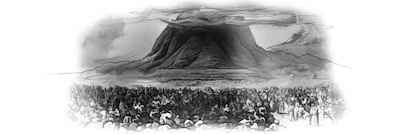
Memory Text: “ ‘You have seen what I did to the Egyptians, and how I bore you on eagles’ wings and brought you to myself’ ” (Exodus 19:4, RSV).
A little boy, one of seven children, met with an accident and was taken to the hospital. In his home there was seldom enough of anything. He never had more than just a part of a glass of milk. If the glass was full, it was shared by two of the children, and whoever drank first had to be careful not to drink too far. After the little fellow was made comfortable in the hospital, the nurse brought him a large glass of milk. He looked at it longingly for a moment and then, with the memory of privations at home, asked, ‘How deep shall I drink?’ The nurse, with her eyes shining and a lump in her throat, said, ‘Drink it all, child, drink it all!’ ”—H.M.S. Richards, “Free Grace,” Voice of Prophecy News, June 1950, p. 4.
Like this boy, it was the privilege of ancient Israel, as it is our own, to drink deeply from the wells of salvation. Israel’s deliverance from centuries of slavery and oppression was a marvelous exhibition of divine grace. Likewise, divine grace is involved in our own emancipation from sin.
The Week at a Glance: What imagery did the Lord use to describe His relationship with Israel? In what ways do the stories of the Exodus and Sinai parallel personal salvation? What was the role of the law in the Sinai covenant?
* Study this week’s lesson to prepare for Sabbath, May 15.
Sunday May 9
On Eagles’ Wings
As a people, Israel had been immersed in Egyptian paganism for many long, hard centuries, an experience that no doubt dimmed their knowledge of God, His will, and His goodness.
How could the Lord win them back to Himself?
For starters, He would demonstrate the genuineness of His love for Israel, and He did this through His mighty acts of deliverance. He would begin to woo the nation into a loving response to His covenant proposal. At Sinai, God first reminded the nation of His gracious acts in their behalf.
What two illustrations describe the manner in which the Lord brought Israel from Egypt to Sinai?
Exod. 19:4, Deut. 32:10–12
Deut. 1:29–31, Hos. 11:1
What would these illustrations teach Israel (and us) about the nature of God’s attitude toward His people?
These illustrations indicate that our God is very much aware of our helplessness. Read Psalm 103:13, 14. In both the figures of the eagle and the parent carrying his child we sense God’s concern for our wellbeing. Tender, supportive, protective, encouraging, He desires to bring us to full maturity.
“The eagle was known for its unusual devotions to its young. It too lived on mountain tops. In teaching its young to fly it carried them upon its back to those great heights that overlook the plains of Sinai, then it dropped them down into the depths. If the baby was still too young and too bewildered to fly, father-eagle would swoop down beneath it, catch it on his back, and fly up again with it to the eyrie on the crags above. And that, says the divine voice, is ‘how I brought you out of Egypt to myself.’ ”—George A. F. Knight, Theology of Narration (Grand Rapids, MI: William B. Eerdmans Publishing Company, 1976), p. 128.
Contrast God’s interest in us with our interest in one another. How should His concern for us affect our concern for others?
Based on your personal experience, what illustrations can you think of to describe God’s unselfish interest in us? Make up a few images on your own, from your own experiences; draw also from whatever culture you live in. Share them with the class.
Monday May 10
The Pattern of Salvation
“ ‘Say therefore to the people of Israel, “I am the Lord, and I will bring you out from under the burdens of the Egyptians, and I will deliver you from their bondage, and I will redeem you with an outstretched arm and with great acts of judgment, and I will take you for my people, and I will be your God; and you shall know that I am the Lord your God, who has brought you out from under the burdens of the Egyptians” ’ ” (Exod. 6:6, 7, RSV).
Look at the above verses: What principle do we see in them, as before, regarding the role of God toward humanity in the covenant relationship? (Focus on how often the word I appears in those verses.)
The deliverance of Israel from Egyptian slavery and the deliverance of Noah and his family from the Flood are the two prominent salvific events in the writings of Moses. Both provide insights into the science of salvation. But it is the Exodus event in particular that provides the basic pattern.
When God says to Israel (through Moses), “I will redeem you” (Exod. 6:6, emphasis supplied), He literally says, “I will act as the kinsman redeemer,” or go’el.
“The word redeem in verse 6 [of Exodus 6] refers to a member of a family buying back or ransoming another member of the family, especially when that member was in slavery for debt or about to go into slavery. Israel apparently had no earthly relative to redeem her, but God was now Israel’s relative, her kinsman redeemer.”—Bernard L. Ramm, His Way Out (Glendale, CA: Regal Books Division, G/L Publications, 1974), p. 50.
How do you understand the idea of God’s “ransoming,” or buying back, His people from slavery? What was the price that had to be paid? What does that tell us about our worth? (See Mark 10:45, 1 Tim. 2:6, and Rev. 5:9.)
In Exodus 3:8 God says that He has “come down” to rescue Israel. This is a common Hebrew verb for God’s interaction with humanity. God is in heaven, and we are on earth, and only as God “comes down” to earth can He redeem us. In the truest sense of the idea, only when Jesus came down, lived, suffered, died, and was resurrected for us could we be redeemed. “And the Word became flesh and dwelt among us” (John 1:14, RSV) is another way of saying that God came down in order to save us.
Tuesday May 11
The Sinai Covenant
The book of Exodus draws the reader’s attention to three major events. Like three mountains, the Exodus itself, the establishment of the covenant, and the building of the tabernacle sanctuary rise above the foothills of lesser happenings. The establishment of the covenant, recorded in Exodus 19 through 24, was the Mount Everest of the three. A brief outline of Exodus 19 through 24 shows the sequence and the relationship of events.
Even if you do not have the time to look up all the verses listed below, focus on the sequence of events:
1. Israel’s arrival and encampment at Sinai after being delivered by the Lord (Exod. 19:1, 2)
2. God’s proposal of a covenant with Israel (Exod. 19:3–6)
3. Israel’s response in acceptance of the covenant (Exod. 19:7, 8)
4. Preparations for formally receiving the covenant (Exod. 19:9–25)
5. Proclamation of the Ten Commandments (Exod. 20:1–17)
6. Moses as covenant mediator (Exod. 20:18–21)
7. Covenant principles spelled out (Exod. 20:22–23:22)
8. Ratification of the covenant (Exod. 24:1–18)
This covenant plays a vital role in the plan of salvation. It is the fourth covenant listed in the Bible (preceded by the ones with Adam, Noah, and Abraham), and in it God reveals Himself more fully than before, particularly as the entire sanctuary ritual is established. Thus, the sanctuary becomes the means by which He shows the people the plan of salvation that they were to reveal to the world.
Though the Lord had redeemed Israel from the bondage of Egypt, He wanted them to understand that redemption had a greater, more significant meaning than merely freedom from physical bondage. He wanted to redeem them from sin, the ultimate slavery, and this could happen only through the sacrifice of the Messiah, as taught in the types and symbols of the sanctuary service. It is no wonder, then, that not long after they were redeemed from bondage and given the law, the Israelites were instructed to build the sanctuary and establish its services, for in these things God revealed to them the plan of redemption—which is the true meaning and purpose of the covenant. For the covenant is nothing if not a covenant of salvation that the Lord offers to fallen humanity. That is what it was in Eden, and that is what it was at Sinai.
Why was a covenant between God and the people of Israel a necessity? (See Deut. 29:10–13; notice, again, the relational aspect of the covenant.)
Wednesday May 12
God and Israel
“Now therefore, if ye will obey my voice indeed, and keep my covenant, then ye shall be a peculiar treasure unto me above all people: for all the earth is mine: And ye shall be unto me a kingdom of priests, and an holy nation. These are the words which thou shalt speak unto the children of Israel” (Exod. 19:5, 6).
In these verses the Lord was proposing His covenant with the children of Israel. Though in one sense the Lord had called them, that calling was not automatically bestowed upon them without their choice. They had to cooperate. Even their deliverance from Egypt involved their cooperation: if they had not done what the Lord had said (such as putting the blood on the doorposts), they would not have been delivered. It was that simple.
Here, too, the Lord does not say to them, “Whether you like it or don’t like it, you will be a peculiar treasure unto Me and a nation of priests.” That is not how it works, and that is not what the text says.
Read Exodus 19:5, 6, quoted above. How do you understand what the Lord is saying in the context of salvation by faith? Does the command included there to obey the Lord somehow nullify the concept of salvation by grace? How do the following texts help you to understand the answer? Rom. 3:19–24; Rom. 6:1, 2; Rom. 7:7; Rev. 14:12.
“We do not earn salvation by our obedience; for salvation is the free gift of God, to be received by faith. But obedience is the fruit of faith.”—Ellen G. White, Steps to Christ, p. 61.
Think of what the Lord was willing to do for the nation of Israel: not only did He miraculously deliver them from Egyptian bondage, but He also wanted to make them His own treasured possession, a nation of priests. Basing their relationship with Him upon His salvation (both temporal, as from Egyptian slavery, and eternal), the Lord sought to elevate them to a spiritual, intellectual, and moral level that would make them the wonder of the ancient world, all for the purpose of using them to preach the gospel to the nations. All they had to do, in response, was obey.
In what ways should our personal, one-on-one experience with the Lord reflect that same principle we see here in today’s study?
Thursday May 13
Promises, Promises . . . (Exod. 19:8)
At first sight, all seems well. The Lord delivers His people, offers them the covenant promises, and they agree: they will do all that the Lord asks them to do. It is a deal “made in heaven,” right?
Read the following texts. What insight do they give us regarding Israel’s response to the covenant?
Rom. 9:31, 32
Rom. 10:3
Heb. 4:1, 2
Whatever God asks us to do, our relationship with Him must be founded upon faith. Faith provides the basis upon which works follow. Works, in and of themselves, no matter how purely motived, no matter how sincere, no matter how numerous, can’t make us acceptable in the sight of a holy God. They could not do it either in Israel’s time, and they cannot in our time, as well.
If, however, the Bible again and again stresses works, why can’t works make us acceptable in God’s sight? (See Isa. 53:6; Isa. 64:6; Rom. 3:23.)
Unfortunately, the Hebrew people believed that their obedience became the means of their salvation, not the result of salvation. They sought righteousness in their obedience to the law, not the righteousness of God, which comes by faith. The Sinai covenant—though coming with a much more detailed set of instructions and law—was designed a covenant of grace as much as all the preceding covenants, as well. This grace, freely bestowed, brings about a change of heart that leads to obedience. The problem, of course, was not their attempt to obey (the covenant demanded that they obey); the problem was the kind of “obedience” they rendered, which wasn’t really obedience at all, as the subsequent history of the nation showed.
Read carefully Romans 10:3, particularly the last part. What point is Paul making there? What happens to people who seek to establish their own righteousness? Why does that attempt inevitably lead to sin, unrighteousness, and rebellion? Look at our own lives. Are we not in danger of doing the same thing?
Friday May 14
Further Thought: Read Ellen G. White, “The Exodus,” pp. 281–290; “From the Red Sea to Sinai,” pp. 291–302; “The Law Given to Israel,” pp. 303–314, in Patriarchs and Prophets.
“The spirit of bondage is engendered by seeking to live in accordance with legal religion, through striving to fulfill the claims of the law in our own strength. There is hope for us only as we come under the Abrahamic covenant, which is the covenant of grace by faith in Christ Jesus. The gospel preached to Abraham, through which he had hope, was the same gospel that is preached to us today, through which we have hope. Abraham looked unto Jesus, who is also the Author and the Finisher of our faith.”—Ellen G. White Comments, The SDA Bible Commentary, vol. 6, p. 1077.
“During the bondage in Egypt many of the Israelites had, to a great extent, lost the knowledge of God’s law, and had mingled its precepts with heathen customs and traditions. God brought them to Sinai, and there with His own voice declared His law.”—Ellen G. White, Patriarchs and Prophets, p. 334.
Discussion Questions:
In what ways was the covenant relationship designed to maintain Israel’s physical and spiritual freedoms? (See Lev. 26:3–13; compare Deut. 28:1–15.)
Read again Exodus 19:5, 6. Notice that the Lord makes this statement: “All the earth is mine.” Why would He say that, particularly in this context, one of seeking to establish a covenant with these people? How does our understanding of the Sabbath, and what it means, fit in here?
We understand that we are forgiven our sins only through God’s grace. How do we understand the role of God’s grace in enabling us to live a life of faith and obedience?
Summary: The covenant God formed with Israel at Sinai was a covenant of grace. Having given abundant evidence of His gracious love and care by an extraordinary deliverance from Egyptian slavery, God invited the nation into a covenant with Him that would maintain and promote their freedoms. Although Israel responded in the affirmative, they lacked a true faith motivated by love. Their later history indicates that, for the most part, they failed to understand the true nature of the covenant and corrupted it into a salvation-by-works system. We need not follow Israel’s failure and ignore the marvelous grace that has been extended to sinners.
Story inside
“Let’s Go to Church!”
By Andrew McChesney, Adventist Mission
Something curious happened once Dr. Hernando Díaz began working at the Seventh-day Adventist clinic on the campus of Colombia Adventist University in Medellin, Colombia. He couldn’t stop praising God.
Hernando had long been a Christian, but he had never loved God so much. When no one would hire him as a physician, the Adventist Medical Center offered him a flexible schedule that allowed him to spend as much time as he needed with his critically ill two-year-old son, Samuel.
His love for God overflowed. He prayed with every patient who consented. He told everyone who would listen that God had miraculously saved his son’s life and marvelously provided him with the job at the clinic. He invited people to the university church, where he and his family regularly worshiped on Sabbath, even though they weren’t Adventists.
One Sabbath after his baptism, Hernando stopped at a red light as he was driving the family to church. A street vendor approached the car holding packs of chewing gum for sale. The sight was typical in Medellin, but Hernando had an unusual response. When he rolled down the window, the street vendor eagerly came up to him, hoping to make a sale. Hernando didn’t mention the chewing gum at all. “Let’s go to church!” he said.
The street vendor didn’t hesitate. “Let’s go!” he said.
Hernando could tell from the street vendor’s accent that he was from Venezuela. Thousands of Venezuelans have crossed the border into neighboring Colombia to look for work amid an economic crisis at home. Hernando shared his personal testimony with the street vendor as they traveled to the university church.
The next Sabbath, the Venezuelan man returned to church with his own family. He and his family never missed a Sabbath. He now cooks and sells food on the street outside the Adventist Medical Center, using a food cart donated by church members. He and his family are taking baptismal classes. Hernando is praying that the family will give their hearts to Jesus, joining the six other people who have been baptized through his efforts.
Hernando said it isn’t difficult to lead people to Jesus. He follows the instructions that Jesus gave to the formerly demon-possessed man: “Go home to your friends, and tell them what great things the Lord has done for you, and how He has had compassion on you” (Mark 5:19, NKJV).
“I haven’t stopped glorifying God with my personal testimony,” Hernando said. “It has touched many hearts.”
This quarter’s Thirteenth Sabbath Offering will help open a missionary training center at Colombia Adventist University. Study Focus: Exodus 19:4, RSV
teachers comments
Part I: Overview
After having lived among the Egyptians, whose religion taught that salvation was purchased by the works of human hands, Israel lost sight of who God truly was. They believed that their obedience to God was their salvation and that redemption arose from their own merit, not in their personal relationship with God.
Part II: Commentary
“When an eagle wants to teach its little ones to fly . . . , it prods one of the little eaglets and with its beak, noses it out of the nest. The eaglet starts to fall, and the great eagle flies underneath, puts its wing out, catches the little one on its back and flies a mile into the air.
“When you can hardly see the eagle as a point in the sky, it turns sideways, and down falls the little eaglet, which goes fluttering maybe a thousand feet.
“Meanwhile, the eagle circles around the eaglet and underneath it, the eagle catches the eaglet on its wings and carries the eaglet up in the air again. After dishing the eaglet out again and letting it go, the eaglet comes down farther and farther—sometimes within a hundred feet of the ground.
“Again the great eagle catches the little one on its back and up they go another mile. Little by little the eaglet will learn how to fly. The eagle knows when the eaglet is tired; it spoons the eaglet into the nest, noses out the next one and starts off again.”—Paul Lee Tan, Encyclopedia of 15,000 Illustrations (Dallas, TX: Bible Communications, Inc., 1998), pp. 3050, 3051.
On Eagles’ Wings
With His sharp talons of grace, the Mountain Eagle of eternity prodded the Hebrew eaglet from the haughty nest of Egyptian oppression. At the Red Sea, the eaglet plummeted into panic when it heard the desert floor thunder with the ensuing chariot wheels of injustice. As the eaglet’s faith fluttered, it beheld two massive, gaping water walls that rose in glorious attention, saluting the majestic Eagle’s omnipotence. Between the lucid water walls, a dry highway had been carved out in supernatural fashion, pointing the trembling eaglet to safe passage.
The Pattern of Salvation
Just as the Hebrew expression go’el in Exodus 6:6 revealed Christ as Israel’s Redeemer-Kinsman, there are four Greek New Testament terms that expand upon how Christ is our Redeemer-Kinsman: “There are four different words used to denote ‘redemption’ in the Greek New Testament: agoridzo, exagoridzo, lutroo, and apolutrosis. . . .
“The first word for ‘redemption’ [agoridzo] tells us that Jesus Christ came to earth to locate us in our depravity and to personally inspect our slavery to Satan.
“The second word for ‘redemption’ (exagoridzo) declares that Jesus came not only to inspect our condition but to permanently remove us from Satan’s power.
“The third word for ‘redemption’ (lutroo) tells us that Jesus was so dedicated to delivering us from Satan’s dominion that He was willing to pay the ransom price of His own blood. . . .
“The fourth word for ‘redemption’ (apolutrosis) tells us that, in addition to permanently setting us free from Satan’s hold, Jesus restored us to the position of ‘sons of God.’ Now we are fully restored and made jointheirs with Jesus Christ Himself (Romans 8:17).”—Rick Renner, Dressed to Kill: A Biblical Approach to Spiritual Warfare and Armor (Tulsa, OK: Teach All Nations, 2007), pp. 81, 98, 99. (Study 1 Cor. 6:20; Gal. 3:13; Gal. 4:4, 5; Eph. 1:7; Titus 2:14; 1 Pet. 1:18, 19; Rev. 5:9; and Rev. 7:14.)
The Sinai Covenant
In the Sinai covenant (see Exod. 19:5, 6), there were three pivotal elements, or points, that Yahweh revealed as He addressed ancient Israel relative to His ordained will for them. The first element of this covenant was God’s expressed desire to make the Hebrew nation a treasured possession. “In contrast to other types of possessions, namely, those that could not be moved, such as real estate, Israel became, through God’s love and affection, His moveable treasure.”—Gerhard M. Hasel and Michael G. Hasel, The Promise: God’s Everlasting Covenant, p. 65.
The second point in this covenant was that Yahweh designed to make Israel a kingdom of priests. In other words: “Each Israelite, in one way or another, was to function as God’s priestly agent to bring blessings to the nations of the entire world and to minister to their needs.”—Gerhard M. Hasel and Michael G. Hasel, The Promise: God’s Everlasting Covenant, p. 66. The third point in this covenant focused on Yahweh’s design for Israel to be made a sanctified nation. In essence, the Israel of the covenant of grace was to become a sacred entity. Having already known that ancient Israel would soon break its covenant agreement (see Exod. 19:7, 8), Yahweh initiated the Sinai covenant. Why? (Study Exodus 32.)
God and Israel
“And now if you will surely listen to My voice, and will keep My covenant, you shall become a special treasure to Me above the nations, for all the earth is Mine. And you shall become a kingdom of priests for Me, a holy nation. These are the words which you shall speak to the sons of Israel.”—The Interlinear Hebrew-English Old Testament, vol. 1, p. 192. (See Exodus 19:5, 6.) “The Gospel is the Law unfolded, nothing more nor less. . . . The Law points to Christ; Christ points to the Law. The Gospel calls men to repentance. Repentance of what?—Of sin. And what is sin?— It is the transgression of the Law. Therefore the Gospel calls men . . . back to obedience to the Law of God.”—Ellen G. White, “The Law and the Gospel,” The Signs of the Times, Feb. 25, 1897.
Promises, Promises . . .
“Should faith and works purchase the gift of salvation for anyone, then the Creator is under obligation to the creature. Here is an opportunity for falsehood to be accepted as truth.”—Ellen G. White, Faith and Works, p. 20. Here is another way to express this truth: it is not faith and works; it is not faith or works. It is a faith that works. We reveal our faith by our works; in fact, works can and do strengthen faith.
Part III: Life Application
For Reflection: During the last week of 1999, salon.com ran a story titled “The Hall of Shame.” It was about the ten most dishonorable sports figures of that year. The list included offenders ranging from someone who was arrested for murder to another person who had been caught with drugs. These were men who had entered into a contract with their teams and fans. They began their careers with the best of intentions: to play well, live honorably, and prove worthy of the signatures on their contracts.
Before one enters into a contract with anyone, it is important to know that person’s character. What is it about God’s character that makes us feel comfortable about entering into a covenant relationship with Him? Do you think He first looks at our characters before entering into relationships with us? Explain.
1. In most partnerships, the benefits to both parties are equal. However, when a holy God enters into a partnership with a sinful human, the relationship begins terribly imbalanced—God brings so much more to the partnership than we ever could. How is it possible to be subject to Him yet have the privilege of being in a partnership with Him? Explain.
2. Before you sign a contract, you should read all the demands and the fine print. But when God makes a covenant, He is very clear. There is no fine print or reading between the lines. His words are a series of definitives: “I will, I will, I will . . .” (for example, see Exod. 6:6, 7). In response, what will you bring into the partnership? If you were in God’s shoes, how comfortable would you be about entering a partnership with someone like you?
3. Contracts are customized to suit the parties concerned, the type of businesses involved, et cetera. In what ways has God customized His covenant with you? How do you show appreciation for the “allowances” He has made in the event you break your contract? How does God’s role as your Friend affect His role as your Partner? Is there a conflict between the two roles? Explain. God recognizes our frailty (see Ps. 103:13, 14). Does this mean that God excuses sin(s)? We know that God forgives sin(s). How is this different?
4. The idea of God coming down to our human level is most obvious in the New Testament, and people often assume that God was remote and unapproachable in the Old Testament. Why is this conception inaccurate?
5. Many of the instructions given to Israel after the Exodus may seem irrelevant and outmoded to the modern person, and it is clear that at least some of them do not directly apply today. How do you think the regulations and rituals given after the Exodus functioned in teaching the lessons God wanted the Israelites to know? How do we know which might still apply to us today?
6. Many commentators on the Bible regard Israel’s collective promise to obey God (see Exod. 19:8) as boastful and misguided. If so, why? Can you think of other responses that might have been more appropriate? What distinguishes true obedience from false or misguided obedience?
xyfqifhavhvm&ef/ t,fvif*sD0Idwfa&;om;aom Patriarchs andProphets, “The Exodus,” pp. 281-290, “From the Red Sea to Sinai,”pp. 291-302, “The Law Given to Isreal,” pp. 303-314. tp&Sdaom taMumif;t&mrsm;udkzwfyg/
Unau sagih lakpan pasalnokhat accident kha in zatopi ah kipaipih hi. A innah bangmah kicing ngei mahmah lo hi. Bawngnawi haikhatpeuh a dawnkhak leh hibek hi. Tua zong haidim a hihleh naupangnih in hawmkullai a, adawnmasa peuhpeuh in tam a dawnluat lohding kidop kul hi. Tua naupang zato ah hoihtakin a kikoih khitciangin, a siamanu in manhai golpi khat adimin bawng nawi hongpuak hi. Duhmahmahna tawh tawlkhat a etkhit ciangin, a inn a omzia teng phawkkha a, ‘bangzah dawnding kahi hiam’ ci in dong hi.Siamanu amit vakkuau a, ‘Dawn o, avekpi in dawn o!’ cihi.”—H. M. S. Richards, “Free Grace,” Voice of Prophecy News, June 1950, p. 4.
Hih pasalnopa bangin, tanglai Israel teleh, tulai eite zong hotkhiatna tuikhukpan avekpi in i dawnding ahi hi. Israel in akum zalomphial saltanna pan a suahtakna pen, Pasian hehpihna lianpi hang hibek hi. Tuamah bangin eite zong mawhna sungpanin Pasian hehpihna mahin hong suahtak hi.
Tukal Enpak:Topa in Amah leh Israel kizopna koibang limtawh lak hiam? Paikhiatnaleh Sinai tangthu in mimal hotkhiatna tawh koibangin kizawitawn thei hiam? Sinai ah thukham in bang thubulpi nei hiam?
SUNDAY May 9
MUVANLAI’ KHA TUNGAH
Israel in minam khatin dingkawmin Egypt dawibiakna sungah kum zatampi kidiah uh a, Pasian leh ama’deihna ahoihnate thei nawn mello uhhi.
Topa in ama’lamah koibangin kaikik zo ding hiam? A kipatna in Topa in ama’itna siangtho Israel tungah lak a, nalamdang lianmahmah tetawh honkhia hi.Zawlhel bangin itna tawh Israel helmasa a, thuciamna dawngding in sam hi. Pasianin Sinai panin ama’hehpihna deihtakin hilhin phawkkiksak hi.
Topa in Egypt pan Sinai ciangdong Israel a tonpihzia gentehnanih, bangteng hiam?
Pai. 19:4, Thuhilhkik. 32:10–12
Thuhilhkik. 1:29-31, Hosea 11:1
Hih thugentehnate in Pasianin mihingte hong lainatna koibangin hong hilh hiam?
Hih gentehnate inmihingte thanemna ah Pasian in lainat mahmah cih hong lak hi. Late 103: 13, 14. Muvanlai leh NuPa in ata pua cih gentehna tegelpen, Pasian in eite hong don cihnopna ahi hi. Lungnem, panpih, kemcing, thaguan in khangcing dingin hong lam-en hi.
“Muvanlai pen anote nakkeplua cih minthangliang hi. Mualsang dawnah teng uhhi. A note leen ahilhna dingin a nungzangah pua in mualsangdawn kahtopih in Sinai mual sangin asangzaw mualsang dawnah puato a, tualai panin kuamthuk sungah khiasuk hi. Muvanlai no in ngeeklualai in lengthei nailo ahihleh, muvanlai apa in, tua muno kiat khiangsuk in anungzangah khawlsak in, mualsangdawn a buu omna ah ciahpih kik hi. Tuamahbangin Topa in ‘Egypt panin hong paikhiat pih Keimah kahi hi’ ci hi.”—George A. F. Knight, Theology of Narration (Grand Rapids, MI: William B. Eerdmans Publishing Company, 1976), p. 128.
Pasianin eite hong lainatzia leh eite khatleh khat i ki lainatzia enkak dih in.
Ama’ hong lainatna in midang i lainat theihna ding hong huhthei diam?
Nangma phutkhak nasamah bangin, Pasian in angkhual hetlo in hong lainatna gen ding nanei hiam? Nangma phutkhak sate panin gentehna pia inla, nangeina uh panin zong pilna la in.
MONDAY May 10
HOTKHIATZIA DING PULAKNA
“Israel mite tungah, ‘Keipen Topa kahihi. Egypt mite’na nasepna uh panin, note kongpaikhiatpih ding hi.Amau sal hihna panin note kongkhahkhia ding a, a thahat kakhut zanin thukhenna naseplian tawh note konghonkhia ding hi. Keima mi dingin note kongla ding a, keipen note Pasian kahi ding hi. Egypt mite’sila hihna panin, note a hong paikhiatpih pa, Topa naPasian uh kahihna, note in nathei ding uhhi.” Paikhiatna 6:6, 7.
Atunga munte simin: Pasianin mihing tawh a thuciamna bawlna ah bang dinmun ah ding a, keimah cih kammal bangzahvei omkha hiam?
Egypt’ sal panin Israel a suahtakna leh Noah innkuam tuiciinpan a suahtakna tangthu tegel pen, Moses laibugelhte lakah a thupipente ahi uhhi. Anihtuakun hotkhiatna pilna hong musak hi. Aettehtak penpen in Paikhiatna tangthu hipen hi. Pasian in Moses tungtawnin Israel mite kiangah “Kong gum ding hi” (Pai. 6:6), a cihciangin, Amah in “Keimahin tankhiapa nasanggampa kahihi” acihna ahi hi.
“Tankhia cih kammal pen (Pai. 6:6) innkuankhat sungah leiba leh thudang tuamtuam hang in sila a suakleh tankhiakik cihna ahihi. Israel in leitungah tankhia ding mi bangmah neilo himah taleh, Pasianin amau sanggam taktak tankhiapa ahi hi.”—Bernard L. Ramm, His Way Out (Glendale, CA: Regal Books Division, G/L Publications, 1974), p. 50.
Pasianin hong leikik hong tankik cihthu, amite salpanin tankik cih koibangin natel hiam? Man bangzah hongpia hiam? Eite’n bangzah man hongci hiam?(Maku 10:45, 1Tim. 2:6, Mang. 5:9).
Paikhiatna 3:8sungah Pasianin Israel honkhia dingin hong “tuaksuk” cihi. Hebrew pau sungah Pasianin mihing a hotkhiatna a genna kammal ahihi. Pasianin vantungah teng a, eite leitung ah; tua ahih manin, Pasian in eite hong tanh dingin “hong tuaksuk”a hong honkhiathei ahi hi. Thu maan thutak in cileng, Zeisu hong tuaksuk, hong nungta, thuaksia, si in thokik ahihman bekmah in hong honkhiazo thei hi. “Tua Thumihing hongsuak in kote lakah teng a” (John 1:14) acihpen, Pasian hong tuaksuk in hong hotkhiatna pulakna khatmah ahih hi.
TUESDAY May 11
SINAI THUCIAMNA
Paikhiatna laibu in asimmi peuhmah thupiang thum tawh lunglutsakzo hi. Mualpi mahbang in, Paikhiatna, thuciamna bawlna leh mualbulzaangtengah biakbuk lamna cihbangteng ahi hi. Pai khiatna 19 pan 24 sungah, thumteng lakpan Everest mual bangin a sangpen omhi. Paikhiatna 19 pan 24 sungtengin a thupiangteng leh a kizopna teng honglak hi.
1. Topa in Israel a hotkhiatkhit Sinai mualbul hongtunguh a giahphual satt (Pai. 19:1, 2).
2. Pasianin Israel tawh thuciamna khat geelna bawl (Pai. 19:3-6).
3. Israel inzong thuciamna lungkim in sang Pai. 19:7, 8).
4. Thuciamna a saan manin a kipuahphatna teng (Pai. 19:9-25).
5. Thukham sawm pulakkhiatna (Pai. 20:1-17).
6. Moses in thuciamna ah Palaipa (Pai.20:18-21).
7. Thuciamna a deihna bulpiteng genkhiatna (Pai. 20:22 pan Pai. 23:22 dong).
8. Thuciamna kipsakna (Pai. 24:1-18).
Hih thuciamna in hotkhiatna ngiimna sungah a thupipen munpan pang hi. Laisiangtho sung ah thuciamna kibawl a liveina hi a (Adam, Noah, Abraham khitciang a kibawl), amasa thumte sang in a kicianzaw pekin biakbuk sungpan hong kipulak hi. Tuapan kipan biakbukpi in leitungah hot khiatnathu pulakkhiatna bulpi hongsuak hi. Topa in Israel pen Egypt salpan honkhia khinzo hinapi, pumpi sal hihnapan suahtakna sangin, a lianzaw suahtakna lianpi telsak nuamlai hi. Saltaktak hong hisak ahi mawhna sungpan honkhia nuam a, tuapen Messiah hong kipiakkhiatna hangbek hiding a, biakbuk nasepna inzong alim leh aliimte hong hilhkhinzo hi. Pasianin amaute salpan a hotkhiat khitphetin, thukham piapah a, biakbuk zong lamsakpah hi. Tua biakbuk in hotkhiatna ngiimna teng alahna hi a, thuciamna i a deihna maantaktak pen hipah hi. Apuksa mihing a dingin thuciamna in hotkhiatna ahih buang keileh thua thuciamna in a mawkna suak ding hi. Eden ah hong ciam masa a, tuakhit Sinai panin zong hongciam phakkik lai hi.
“Note in kathu mangin kathuciamna nazuihuh leh mite khempeuh lakpanin notepen keima’mi nahi ding uhhi, Leitung khempeuh keima’aa hi a, notepen keima siampi nasep asem minam leh minam siangtho nahi dinguh hi. Israel mite tungah hithute nagen ding hi” (Paikhiatna 19:5, 6).
Hitakah Topa in Israel tetawh Ama’ thuciam dingteng pulak hi. Thukhatah, Topa’n amau sam a, ahihhang amau’teeltawmna lopeuhmah tawh tangtung saktuanlo hi. Amau unzong mapang khawm ding uhhi. Egypt pan a suahtakna uhzong amau mapankhop hangmah hi a: Topa’n amau’ kongkhakkhuamnihte tungah sisan nuhding asawl bangin nuhkei lehuh, suakta tuanlo ding uhhi. Mapang hipah lel hi.
Topa in, “Note utleh utlohthu hi lo, notepen keima’ading neihtuam leh siampinam hihloh phamawh” khawng cihetlo hi. Tuabangin Topa’n nasemlo, laisiangtho inzong cilo hi.
Paikhiatna 19:5, 6, atung a pen simkikin. Topa in upna hangin hotkhiatna agen nakoicitel hiam? Topa’thu manlelna in hehpihna tawh hotkhiatna hi losakzo hiam? Anuai a munte in teltheihna’ng hong bangci huhtheih tammaw? Rom. 3:19-24; 6:1, 2; 7:7; Mangmuhna. 14:12.
“Ei thumanna lel inbel hong honkhia zolo hi; hotkhiatna pen Pasian hong piakkhong hi a, upna tawh saanding ahi hi. Himah taleh hotkhiatna in thumanna’gah ahi hi”—Ellen G. White, Steps to Christ, p. 61.
Topa’n Israel ading asepsak nopte ngaihsun lecin: Egypt pan a lamdang mahmahin honkhia bek hi lo in, Ama’aituam neihsa, leh siampinam hisak nuamlai hi. A hotkhiatna tungtawn kizopna bulphuh in, (Egypt saldinmun ah tawmvei bek leh zompaisuak ding) Topa in, Khalam, pilna lam leh lungsim lam khangto sakin tanglai leitung a ding nalamdang hisak nuam hi. Tuate khempeuh pen minam tuamtuamte kiangah lungdamthu tangkona ding geelna vive ahi hi. Amau mapanna dingpen thumang ding hipeuh hi.
Eite mimalin khatsimin i phutkhak thute lakah tuni sinna tawh a kituak khatpeuh a omkha thei diam?
THURSDAY May 13
KAMCIAMTE, KAMCIAMTE . . . . (Paikhiatna. 19:8)
Etpak in bel, hoihlel e. Topa’n amite honkhia, kamciamte pia, amau zong thukimuh: Topa hong nget khempeuh kahih ding uhhi. Tuabangin kithalawh ahiam?
Anuai teng simin. Israel in thuciamna azawpna uh koibangin hong lak hiam?
Rom. 9:31, 32
Rom. 10:3
Hebrew 4:1, 2
Pasianin hong ngetpeuhpeuh pen, upna tungtawnin i kizopna tungah tuang ding hi.Sepna in upna bulphuh hi. Sepna bilbel pen, bangzah i lawp a, bangzah siangtho a, bangzahin tam taleh, a siangtho Pasian’maiah saantakcing hizo peuhmahlo hi. Israel hunlai in hitheilo, tulai eihunah zong hithei tuanlo hi.
Laisiangtho in sepna vive gengen hinapi, banghangin sepnapen Pasian’maiah saantakcing theilo hiam? (Isa. 53:6; Isa. 64:6; Rom. 3:23).
Hebrewte leuleu in amau thumanna hangin hotkhiat ngah kisa mikmek uh a, hotkhiatna gah ahih phawkzolo uhhi. Thukham zuihna tawh dikna zong uh a, upna hang a Pasian’dikna zong zaw khalo uhhi. Sinai thuciamna in thukham’ thute a picing dildel in pia atuazong, thuciam masa khempeuh mahbangin hehpihna tawh thuciamna mah ahi hi. A khawnkhong in hongluang hong hehpihnain lungsim hong khelsakzo a, thumanna ah hong lutpih hi. I buaipihzawk penin, thuman nopna hizawlo a, a thumanzia, thumang taktak ahi lo khat in a minambupun gamta uhhi.
Rom. 10:3anununglamlim simin.Paulin bang gennuam hiam? Amau dikna peuh a pibawl nuamte tungah bangthu piang hiam? Tua in koibangin mawhnalam leh langdonalam hong manawhpih thei hiam? Eima nuntakzia ki enni. Tua mahbang kigamta hi lo hiam?
FRIDAY May 14
NGAIHSUTBEH DING: Ellen G. White,Patriarchs and Prophetspan “The Exodus,” lai. 281-290; “From the Red Sea to Sinai,” lai. 291-302; “The Law Given to Israel,” lai. 303- 314, simin.
“Biakna thukham ombangin nuntaknopna hangin eima thahatnatawh thukham zuihkisawm pah a hihmanin, khalam saltanna hong piangsak hi. Khazih Zeisu sungah upna hangin hehpihna tawh thuciamna ahi Abraham thuciamna nuai ah omna bekin lam-etna hongpia hi. Abraham in lam-etna aneisak lungdamthumahin, tulai eite zong lam-etna hongneisak hi. Abraham in zong eite’upna hongpia, hong picingsakpa Zeisu mah manawh hi.”—Ellen G. White Comments, The SDA Bible Commentary, Vol. 6, p. 1077. “Egypt ah saltanlai in, Israel tampitak mahin, Pasian’thukham theinawnlo phial in, lawki dawibiakna ngeina peuhtawh helzau gawpgawp uhhi. Pasianin Sinai ah hong makaih a, Ama’aw ngiat tawh A thukhamna genkhia hi”—Ellen G. White, Patriarchs and Prophets, p. 334.
(Siampi. 26:3-13; leh Thuhilhkikna 28:1-15enkakin). 2. Paikhiatna 19:5, 6 simkik in. “Leitung khempeuh keima’aa hi” cih Topa’ kammal lungngai in. Hih mitetawh thuciamna bawlding khawngpeuh banghangin hihbang kampau hiding hiam? Sabbath nateldan khawng leh hihte akinaihna peuh a omkha diam?
3. Pasianin hong hehpihna bekmahtawh mawhna hong maisakcih i theihsa ahi hi. Pasian hong hehpihna in thu-um thumang nuntakna koibangin hongpia thei ding hiam?
THUKHUPNA: Pasianin Sinai mualah thuciamna abawlpih penhehpihna thuciamna ahi hi. A kicing mahmah hehpihna lakin, Egypt salpan a lamdang suahtakna zong apiakkhit teh, amau’suahtakna a khantoh theihna dinginthuciamna ah lutpih leuleu hi. Israel in tua thuciamna kipsaksam hinapi, itna taktak tawh zuikhalo uhhi.Amau’ tangthu a tawpna lamah, tua thuciamna omzia telciannawnlo in sepna tungtawn in hotkhiatna thalawh dinglamah hong pial uhhi. Israel mite bangin a lamdang hehpihna awlmawhlohna tawh khialkha peuhmah keini ei.
ZIRLÂI 7 May 8–14
SINAI TLÂNGA SIAM THUTHLUNG
SABBATH CHAWHNU May 8
CHHIAR TÛRTE: Deut. 1:29–31; Hosea 11:1; Thup. 5:9; Deut. 29:10–13; Exod. 19:5, 6; Rome 6:1, 2; Thup. 14:12; Rome 10:3. CHÂNGVAWN: “Aigupta-hote chunga ka tih ziate leh, mupui thlâa ka put che u-a, ka hnêna ka hruai thlen zia che u hi in hmu a” (Exodus 19:4).
“Mipa naupang pakhat hi a accident avângin damdâwi inah dah luh a ni a. An ûnau hi pasarih lâi an ni a, an harsat ve deuh avângin ei leh in tûr duhkhawp pawh an nei thîn lo. Bawnghnute takngial pawh ni tin no khat in tûr an nei zo lo va—mi pahnihin no khat in-intâwmin a in hmasa zâwktu chuan a chanve âia tam a in loh nân a fîmkhur hle a ngâi thîn a ni. Hetia damdâwi ina an indah luh hnu rei vak lohah hian nurse pakhat chu lo kalin no lian tak hian bâwnghnute a rawn keng a. An in lama kham khawp an in theih thin loh dân te kha ngaihtuah pahin a lo thlîr dauh dauh mai a, tichuan, ‘Eng zât thleng nge ka in ang?’ tiin a zâwt ta tawp mai a. Chutah nurse chuan mittui parawl kuang chung leh, chil lem khalh khalh pahin, ‘A vâiin in vek rawh!’ tiin a chhâng ta a.”—H. M. S. Richards, “Free Grace,” Voice of Prophecy News, June 1950, p. 4.
He mipa naupang ang deuh hian, hmâsâng Israelte khân an duh tâwkin chhandamna tuikhur hi an thâl thei thîn a, chutiangin keini pawhin kan duh zât zât kan in thei bawk. Aigupta bâwiha kum za eng emaw zât chhung an tân hnua chhanchhuah a ni ta kha Pathian khawngaihna târ langtu ropui tak a ni a. Chutiang chiah chuan, sual laka zalênna kan lo neih theih chhan chu Pathian khawngaihna vâng liau liau a ni.
ZIRLÂI THLÎR Lâwkna: LALPAN Israel nêna inlaichînna an neih dân sawi fiah nâna tehkhin thu a hman chu eng nge ni? Eng tiangin nge Aigupta ram atanga Israel fate hruai chhuah an nih dân leh Sinai tlânga siam thuthlungte kha mi mal chhandamna nên a inan?
SUNDAY May 9
MIPUI THLÂ-AH
Hmâsâng Israel mite kha Aigupta sakhua leh pathian chi hrang hrangten a chiahpiah hneh hle mai a. Chuvâng chuan Pathian dik tak chanchin te, a thiltum te leh a thatna pawh eng emaw chen chu an theihnghilh phah ta hial nghe nghe a ni.
Eng tin nge LALPAN a lamah a hneh lêt leh theih ang?
A hmasa berin, Israel mite kha a hmangaih tak zet a ni tih a lantîr phawt ang a, chu chu sal an nihna ata mak tak maia a chhanchhuahna hmangin a ti bawk ang. Chutichuan, a thuthlung siam chu lo hmangaihna nêna lo chhâng tûrin a sâwm leh ang a. Sinai tlângah khân a khawngaih avânga thil a lo tihsak tawhte chu a hriattîr phawt a nih kha.
LALPANIsrael mite Aigupta ram a\anga Sinai tlâng a hruai thlen dân sawi fiahna atâna tehkhin thu pahnih a hman chu eng nge ni?
Exod. 19:4, Deut. 32:10–12
Deut. 1:29–31, Hosea 11:1
Hêng tehkhin thu pahnihte hian Israel mite kha (keini pawh a ni tho ang) Pathianin a mite chunga a rilru put dân eng tin nge a hrilh le?
Hêng tehkhin thu pahnihte hian kan Pathianin tanpui kan ngaihzia a hre chiang hle a ni tih a tilang. Sâm 103:13, 14 chhiar la. Mupui thlâa pû tih leh nu leh paten an fâte an pawm ang tih tawngkamte hian Pathianin kan thatna tûr a ngaihtuahzia a tilang chiang hle. Duat takin min enkawl a, tanpui kan ngaihna lâia min tanpuiin, min vênghim a, min fuih thatho reng thîn bawk. Kawng eng kima mi puitling ni tûra min chher chhuah hi a duh êm êm a ni.
“Mupui hian a notê a ngaihsakin a enkawl uluk hle mai. Tlâng chhîp sâng taka awm thîn a ni a. A notê-te chu a hnungah pua-in thingkûng sâng tak tak lêrah a thlawh chhohpui a, chuta tang chuan thlawh dân an lo thiam theih nân a thlauh lui ta thîna. A notê chu a la têt tham deuh a, thlawh a la hlau a nih chuan mupui pâ zâwk chu a hnuaiah lo awmin a hnungah a lo paw thîn a, tichuan, thlawh chhohpuiin khâm panga an buzâwlah chuan a han dah ta thîn a ni. Chutiang deuh chuan, Pathian pawhin Israel mite kha “mupui thlâa ka put che u-a, ka hnêna ka hruai thlen zia che u hi in hmu” tiin a sawi a.”—George A. F. Knight, Theology of Narration (Grand Rapids, MI: William B. Eerdmans Publishing Company, 1976), p. 128.
Pathianin min ngaihsak dân leh keini’n mi dangte kan ngaihsak dân hi khâikhin la. Heti taka min ngaihsak thinna hian mi dangte pawh ngaihsak leh zual tûrin min tur ve tûr a ni dâwn lo’m ni?
I thil lo tawn tawhte atangin mahni hmasialna tel miah lova Pathianin min ngaihsak thinzia tilangtu engte nge sawi tûr i neih le? Chûngte chu in class-ah i sawi chhuak dâwn nia.
THAWH|ANNI May 10
THE PATTERN OF SALVATION
“Chuvângin, Israela thlahte hnênah chuan, ‘Kei Jehova ka ni a, Aigupta-hote phurrit lak ata hi ka hruai chhuak ang che u a, an bâwiha in awm hi ka chhuahtîr ang che u; tin, nasa taka ngaihtuah che u-in bân phar meuhvin ka tlan ang che u:tin, ka mi atân ka nei ang che u a, tin, kei in tân Pathian ka ni ang; tichuan kei hi Jehova, in Pathian, Aigupta-ho phurrit lak ata hruaichhuaktu che u ka ni tih in hria ang “ (Exod. 6:6, 7).
A chûnga Bible châng târ lan hi chhiar la. Hetah hian a hmâa mi ang bawk khân thuthlung inlaichînnaa Pathianin mihringte tâna thil a tihte chu eng nge kan hmuh le (ka tih thumal a hman tamzia hi lo chhinchhiah la).
Aigupta bâwih ata Israel-te chhan chhuah a nihna leh, tuilêt laka Nova leh a chhûngte chhanhim an nihna te kha Mosia lehkhabu-a thil thleng langsâr tak ve ve a ni. Hêng thil thleng pahnihte hian chhandamna chanchin hre thiam tûrin min tanpui a. Israel-te chhan chhuah an nihna phei hi chuan min hriatthiamtîr leh zual hle a ni.
Israel mite hnênaPathianin (Mosia kal tlanga), “Ka tlan ang che u” (Exod. 6:6) tih thu a sawi hian a awmzia takah chuan, “In chhûngkaw zînga mi ngei, nangmahni tlantu ka ni ang” (Hebrai tawngin, go’el) a tihna a ni.
“[Exodus 6] châng 6-a tlan tih thumal hian chhûngkaw member pakhatin chhûngkaw member zînga mi ni ve tho mi dang, leibat tlâk theih loh avânga bâwiha tâng mêk emaw, tân mai hmabâk emaw a tlan chhuah tak ang hi a kâwk a. Israel hnam pawh khân leiah hian amah tlan chhuaktu tûr chhûng leh khat a nei lo tih a lang a; mahse, Pathian chu Israel-te laina hnâiah lo tangin, an chhûngkaw zînga mi ngei, anmahni tlan chhuaktu a lo ni ta a ni.”—Bernard L. Ramm, His Way Out (Glendale, CA: Regal Books Division, G/L Publications, 1974), p. 50.
Eng tiangin nge sal nihna ata Pathianin a mite a “tlan chhuak” tih awmzia hi i lo hriat thiam ve? Anmahni lei chhuahna man atân eng nge a pêk? Chu chuan kan hlut dân eng tin nge a tihlan?(Marka 10:45, 1 Tim. 2:6, Thup. 5:9.)
Exodus 3:8-ah chuan Pathianin Israel fate chhan chhuak tûra a “lo chhuk” thu a sawi a. “Chhuk” tih thumal hi Hebrai-hoten mihringte tanpui tûra Pathian rawn chêt thu an sawina tlânglâwn tak a ni. Pathian chu vânah a awm a, keini chu leiah kan awm ve thung, chuvâng chuan leia Pathian a “lo chhuk” a nih chauhin min tlan thei dâwn a ni. Chutiang chiah chuan Isua kha kan tân khawvêlah a lo chhuk a, a rawn chêng a, hrehawm a tuar a, a thî a, a thawh leh tâk bawk avâng chauhin tlan kan lo ni thei a. “Tin, Thu chu tîsâ-ah a lo chang a, kan zîngah a awm ta a” (Joh. 1:14) tih thu hi min chhandam tûra Pathian lo chhuk thu sawina kawng dang leh chu a ni bawk.
THAWHLENI May 11
SINAI THUTHLUNG
Exodus lehkhabu hian thil thleng lian tham tak tak pathum min hrilh a. Tlâng lian tak tak pathum ang deuhin Aigupta ram atanga Israel fate hruai chhuah an nihna te, thuthlung siam a nihna te leh Pathian chênna tûr biak bûk sak a nihna te hi thil thleng tê tham deuh zâwk chungah a intiang chho a ni. Hêng thil thleng pathum zîngah rau rau pawh hian thuthlung siam thu, Exodus 19–24-a kan hmuh hi a langsâr ber a ni a. Exodus 19 atanga 24 thu tlângpui hian thil thleng hrang hrangte thlen dân indawt leh inzawm kual vek dân min hrilh.
A hnuaia Bible châng târ lante hi a zavâia i chhiar vek hman lo a nih pawhin, thu thlun a nih dâwn leh thlun lâi vêla thil thleng hrang hrangte thlen dân indawt tal hi chu lo en ngun deuh bîk ang che:
1. Israel fate chu LALPAN a hruai chhuah hnu-ah Sinai tlâng an thleng a, chutah chuan awm hmun an khuar nghâl (Exod. 19:1, 2).
2. Pathianin thu thlunpuiah Israel fate a sâwm (Exod. 19:3–6).
3. Israel faten Pathian sâwmna chu an lo pawm (Exod. 19:7, 8).
4. Thuthlung dawng thei tûrin Israel fate an inbuatsaih (Exod. 19:9–25).
5. Thu Sâwm Pêkte puan chhuah a ni (Exod. 20:1– 17).
6. Thuthlung palâi hna thawktu-ah Mosia a tang(Exod. 20:18–21).
He thuthlung hian chhandamna ruahmanah dinhmun pawimawh tak a luah a. Bible-a thuthlung kan hmuhte zînga a pali-na niin (hemi hmâ hian Adama te, Nova te leh Abrahama a lo thlunpui tawh a), biakbûk rawngbâwlna tan a nih tâk hnu-ah phei kha chuan Pathian pawh a hmâa a lo inpuan tawh thin dânte âia chiang leh zualin a rawn inpuang ta a. Chutichuan, biak bûk kha khawvêl hnêna an puan tûr chhandamna ruahman Israelte a entîrna kawng pawimawh tak a lo ni ta a ni.
LALPA chuan Israel mite kha Aigupta bâwih atangin tlan chhuak tawh tho mah se, chu tlanna chuan tisa sal tânna lak ata zalênna âia awmze ropui zâwk leh pawimawh zâwk a nei a ni tih hre thiam tûrin a duh a. Sualna lak ata tlan chhuah a duh a, chu chu biak bûk rawngbâwlnaa hlimthlâ leh entîrnaten an kawh Messia inhlanna kal tlang chauhin a thleng thei bawk. Chuvâng tak chuan, khatia sal a nihna ata tlan chhuah a nih atanga rei vak lo, dân pêk a nih hnu deuh lawkah khân biak bûk rawngbâwlna din tûra hrilh an ni a, chu chu Pathianin tlanna ruahman— thuthlung awmze dik tak leh thuthlungin a tum ber ni bawk—a puan chhuahna tûr hmun a ni. Thuthlung hi suala tlu tawh mihringte hnêna LALPAN pêk a tum chhandamna thuthlung a ni lo a nih chuan eng mah lo mai a ni a. Chutiang thuthlung chu Eden huanah khân puan lo ni tawhin, Sinai tlângah pawh hian puan a rawn ni ve leh ta a ni.
Eng vângin nge Pathian leh Israel mite inkârah khân thuthlung a awm a tûl le? (Deut. 29:10–13 chhiar la, hetah pawh hian thuthlung chu inlaichînna thil a ni tih i lo hre thiam dâwn nia.)
NILÂINI May 12
PATHIAN LEH ISRAEL
“ ‘Chuvângin ka thu in ngaihthlâk tak zet a, ka thuthlung hi in pawm chuan khawvêl hnam zawng zawng zîngah hian ka tân ro thlan bîk in ni ang: khawvêl pum pui hi ka tâ a ni si a: tichuan ka tân puithiam chi, hnam thianghlim in ni ang’ tiin hrilh ang che. Hêng thu hi Israela thlahte hnêna i sawi tûr chu a ni” (Exod. 19:5, 6).
Hêng chângahte hian LALPAN a thuthlung pawm tûra Israel fate a sâwm thu kan hmu a. LALPA hian a ko chu ni tho bawk mah se, anmahni duhthlanna pawh ngâichâng hran lêm lovin a pâwng koh ngawt chu a ni lo thung tih hria ila. A awmzia chu, LALPA an lo thawhpui ve a ngâi tihna a ni. Aigupta ram ata hruai chhuah an nihnaah pawh khân an lo thawk tlâng tawh a: LALPAN ti tûra a hrilhte kha lo ti lo ta ang se chuan (entîr nân, an kawngka bianga ran thisen tah tih te kha) chhanchhuah an ni hauh lo vang. Chutiang chu thil nih dân a ni.
Tûn tumah pawh hian LALPA chuan, “In duh emaw, duh lo emaw—ka tân ro thlan bîk leh puithiam chi in ni dâwn hrim hrim” a ti ngawt lo. Chutiang chu a tih dân a ni ngâi lo va; tin, chutiang chu a ti niin Bible pawh hian a sawi hek lo.
Exodus 19:5, 6 kha chhiar leh a. LALPAN a thupêkte pawm tûrin a hrilh a, chuti a nih chuan rinna avâng ni lovin, thu zawm avânga chhandam ni zâwk kan ni tihna a ni em? Hêng Bible chângte hian chumi chhânna chu hre thiam tûrin eng tin nge min puih le?Rome 3:19–24; Rome 6:1, 2; Rome 7:7; Thup. 14:12.
“Chhandamna hi thu kan âwih êm avânga chang kan ni lo; Pathian thilthlâwnpêk niin, rinnaa lo dawn tûr a ni. Mahse, rinna rah chu thuâwihna a ni thung.”—Ellen G. White, Krista Panna Kâilâwn, p. 61.
LALPAN Israel hnam tâna thil tih a tum hi ngaihtuah la: mak tak maiin Aigupta bâwih nihna ata a chhan chhuak a ni mai lo va, ama ro thlân bîk leh puithiam chî-a siam pawh a duh bawk. Amah nêna an inlaichînna chu a chhandamnaa (Aigupta bâwih nihna ata a chhan chhuak phawt a, nakînah chatuana nunna a pe leh bawk ang) innghat niin, thlarau, rilru leh thil tha duhna kawngah pawh an hun lâi khawvêla mite chung en leh ropui tih khawp hiala siam a tum a ni. Hnam hrang hrangte hnêna chanchin tha hrilna hmanrua atân hman a duh a. Chumi an lo chhân lêtna tûra an tih tûr awm chhun chu a thu zawm a ni.
Eng tiang kawngtein nge mi mal taka LALPA kan tawn dân hian vawiin zirlâia kan hmuh ang hi a lan chhuahtîr ang?
NINGANI May 13
THUTIAMTE, THUTIAMTE . . . . (Exod. 19:8)
A tîrah chuan eng kim a kal tluang vek niin a lang. LALPAN a mite a chhan chhuak a, thuthlung thutiamte a hrilh a, anni pawhin an lo pawm thlap bawk: LALPAN ti tûra a hrilh zawng zawng chu an ti vek dâwn a. He inremna hi “vâna siam” inremna a ni e pawh kan ti thei ang chu.
Hêng a hnuaia Bible châng târ lante hi chhiar la. Israel miten thuthlung an lo chhân lêt dân chungchâng eng nge min hrilh hlawm le?
Rome 9:31, 32
Rome 10:3
Heb. 4:1, 2
Pathianin ti tûra min hrilh chu eng thil pawh lo ni se, amah nêna kan inlaichînna chu rinnaa innghat a ni tûr a ni a. Rinna chu thiltihin a rawn zui ve mai dâwn a ni. Thil tha tih hian, amah ngau ngau chuan, rilru thianghlim tak pu chunga tih pawh ni se, tih tak zeta tih pawh ni se, eng anga tam pawh ni se, Pathian thianghlim mithmuha pawm tlâkah mi a siam thei chuang lo. Israel mite hun lâi khân a siam thei lo va, tun lai keini hunah pawh hian a siam thei chuang bîk hek lo a ni.
Bible hian hmun hrang hrangah thil tha tih pawimawhzia sawi uar hle tho mah se, eng vângin nge thil tha tih chuan Pathian mithmuha pawm tlâka mi a siam chuan si loh le? (Isa. 53:6; Isa. 64:6; Rome 3:23 en la.)
Vânduaithlâk takin, Hebrai mite khân Pathian thu an âwihna chu chhandamna rah chhuah ni lovin, chhandamna an hlawh chhuah theihna tûr kawng zâwk emaw an ti tlat pek a. Rinna avânga lo thleng Pathian felna churin chhan ta mai lovin, dân thu zawm that avânga mi fel nih an tum tlat mai a ni. Sinai thuthlung kha—inzirtîrna thu chipchiar tak leh dân chi hrang hrang chu awm tho mah se—thuthlung hmasate ang bawka khawngaihna thuthlung ni ve tho a ni a. He khawngaihna, a thlâwna pêk hian thuâwihna thlentu thinlung inthlâk thlengna a rawn thlentîr thîn. Thuâwih hrim hrim hi chu an harsatna a ni hran lo va (thuthlung hian thuâwih tûrin a phût miau a), thu an âwihna hian a chhandam dâwn nia an ngâi tlat mai kha a buaithlâk lâi chu a ni ta a ni. Chhandam nih duh vâng maia thuâwihna chu thuâwihna dik tak a ni lo hrim hrim si a.
Rome 10:3 chhiar la, a tâwp lam hi chhiar ngun zual deuh bîk ang che. Hetah hian eng thu nge Paulan a sawi? Anmahni felna tihngheh tumtute chungah hian eng nge lo thleng thîn? Eng vângin nge mahni felna tihngheh tumna hian sualna, fel lohna leh helnaah mi a hruai thin? Keimahni nun theuh inbih chiang ila, hetiang thil hi kan lo ti ve reng tho lo maw?
ZIRTÂWPNI May 14
ZIR BELHNA: Ellen G. White-i lehkhabu,Thlahtubulte leh Zâwlneite phêk 277–288, “Aigupta Chhuahsanna” tih te; phêk 289–302, “Tuipui Sen Atangin Sinai Tlângah” tih te; phêk 303–317, “Israel-te Hnêna Dân Pêk” tih te chhiar ni se
“Dân anga sakhaw kalpui tumna, dânin a phût thilte keimahni chaknaa hlen chhuah tuma beihna hian hian saltânna rilru min puttîr thîn a. Mahse, Abrahama thuthlung—chu chu Krista Isua rin avânga khawngaihna thuthlung a ni—hnuaia kan intûk luh chauhin kan tân beisei tûr a awm. Abrahama hnêna hril chanchin tha, amah ngei pawhin beiseina a lo neih theih phahna kha keini tûn lâi huna mite hnênah pawh hian hril a ni a, chumi azârah chuan beiseina kan nei ve thei ta. Abrahama khân kan rinna Siamtu leh Tifamkimtu Isua Krista hi a lo thlîr thîn a ni.”—Ellen G. White Comments, The SDA Bible Commentary, vol. 6, p. 1077.
“Aigupta sala an tân chhûng khân Israel mipuite chuan Pathian dânte chu an lo theihnghilh hman deuh vek tawh a, ring lo mite puithuna thil leh tih dânte nên an chawhpawlh nasa hle bawk. Tichuan, Pathianin Sinai tlângah a hruai a, chutah chuan ama âw ngeiin a dânte a puang chhuak ta a ni.”—Ellen G. White, Thlahtubulte leh Zâwlneite, p. 339.
SAWIH HO TÛRTE:
1. Eng tiang kawngtein nge thuthlung inlaichînna kha Israel miten taksa leh thlarau lama zalênna an neih theihna tûra duan a nih? (Lev. 26:3–13; Deut. 28:1–15.)
2. Exodus 19:5, 6 chhiar la.LALPAN, “Khawvêl pum pui hi ka tâ a ni si a” tih thu a sawi hi ngun takin ngaihtuah ang che. Eng vângin nge he thu hi thu thlunpui a tum Israel-te hnênah khân a sawi? Eng tiangin nge he thu awmzia hi Sabbath kan pawm dân hian hre thiam tûrin min puih le?
3. Kan sualte hi Pathian khawngaihna azârah chauh ngaihdam a nih tih kan hria a. Eng tiangin nge rinna leh thuâwihna nun nei thei tûr hian Pathian khawngaihna kan mamawh a ni tih kan hriat thiam?
ZIRLÂI KHÂIKHÂWMNA: Pathianin Sinai tlânga Israel-te a siampui thutlung kha khawngaihna thuthlung a ni a. Anmahni a hmangaihzia leh ngaihsakzia nasa taka lantîrin, Aigupta bâwih nihna ata a chhan chhuak a, tichuan, zalênna an lo neih theihna tûrin thu thlunpuiah a sâwm zui ta bawk a ni. Israel-te khân thuthlung chu an pawm tûrzia sawi tho mah se, hmangaihnain a tur chhuah rinna an tlachham hle thung a. An chanchin tâwp lam kha han thlîr ila, thuthlung nihphung dik tak an hriat thiam lohzia leh chu thuthlung chu thiltiha chhandamna hlawh chhuah tumna hmangin an tikhaw lo zo ta vek a ni tih kan hre thei ang. Israel-te lo hlawhchham tawhna kha keini chuan pumpelh kan tum tûr a ni a, mi sualte hnêna pêk khawngaihna mak tak mai hi kan ngaihthah ve tûr a ni lo.
“ ‘Julle het self gesien wat Ek aan die Egiptenaars gedoen het, en dat Ek julle op arendsvlerke gedra en julle na My toe gebring het.’ ” (Exodus 19:4).
̓n Klein seuntjie, een van sewe kinders, was in ‘n ongeluk betrokke wat hom in die hospitaal laat beland het. In sy huis was daar amper nooit genoeg van enigiets nie. Hy het nooit meer as net ‘n gedeelte van ‘n glas melk kon drink nie. As die glas vol was, moes twee van die kinders dit deel, en wie ook al eerste gedrink het, moes versigtig wees om nie te veel te drink nie. Nadat die seuntjie gemaklik gemaak was in sy hospitaalbed, het die verpleegster vir hom ‘n groot glas melk gebring. Hy het smagtend daarna gekyk en toe, gedagtig aan die gebrek by sy huis, het hy gevra, ‘Hoe diep mag ek drink?’ Die verpleegster, met tranerige oë en ‘n knop in haar keel, sê toe, ‘Drink maar alles, kind, drink maar alles!’ ” — H. M. S. Richards, “Free Grace,” Voice of Prophecy News, Junie 1950, bl. 4, (vry vertaal). Net soos hierdie seuntjie, was dit die voorreg van antieke Israel, en nou ons, om vrylik en onbeperk uit die fonteine van verlossing te drink. Israel se bevryding uit eeue se slawerny en verdrukking was ‘n wonderbaarlike skouspel van goddelike genade. Op dieselfde wyse is goddelike genade in ons bevryding uit sonde betrokke.
Hierdie week met een oogopslag: Watter beeldspraak het die Here gebruik om sy verhouding met Israel te beskryf? Hoe stem die verhale van die Uittog en van Sinai met persoonlike redding ooreen? Wat was die rol van die wet in die Sinaïtiese verbond? *Bestudeer hierdie week se les as voorbereiding vir Sabbat, 15 Mei.
Sondag 9 Mei
Op arendsvlerke
Die volk Israel was vir baie lang en moeilike eeue in die Egiptiese heidendom vasgevang, ‘n ondervinding wat, sonder twyfel, hulle kennis oor God, sy wil en sy goedheid, verdof het. Hoe sou die Here hulle kon terugwen na Hom toe? Om mee te begin het hy sy opregte liefde vir Israel deur sy magtige bevrydingsdade gedemonstreer. Hy het hulle probeer oorhaal om liefdevol op sy verbondsaanbod te reageer. By Sinai het Hy hulle eerstens aan sy barmhartige optredes teenoor hulle herinner.
Watter twee illustrasies beskryf hoe die Here Israel van Egipte tot by Sinai gebring het? Exodus 19:4, Deuteronómium 32:10–12
Deuteronómium 1:29-31, Hoséa 11:1
Wat wil hierdie illustrasies vir Israel (en ook vir ons) oor die aard van God se gesindheid teenoor sy volk, leer?
Hierdie illustrasies dui aan dat onse God baie bewus van ons hulpeloosheid is. Lees Psalm 103:13, 14. In beide die voorbeelde van die arend en van die vader wat sy kind dra, word ons van God se besorgdheid oor ons welstand bewus. Teerheid, ondersteuning, beskerming, aanmoediging: Hy begeer om ons tot volle volwassenheid te bring. “Die arend was nog altyd vir sy ongewone toegewydheid aan sy kleintjies bekend. Hulle leef mos op die bergtoppe. In die proses om sy kleintjies te leer om te vlieg, dra hy hulle op sy rug na groot hoogtes bo die pleine van Sinai, en laat val hulle dan die dieptes in. As die baba dan nog te jonk en te verwilderd is om te vlieg, duik pa-arend af na onder om die kleintjie op sy rug te vang, en vlieg dan weer na die arendsnes teen die kranse daarbo. En die goddelike stem sê, net so ‘[het Ek] uit Egipte . . . my seun geroep.’” — George A. F. Knight, Theology of Narration (Grand Rapids, MI: William B. Eerdmans Publishing Company, 1976), bl. 128, (vry vertaal).
Kontrastreer God se belangstelling in ons met ons belangstelling in mekaar. Hoe behoort Sy besorgdheid oor ons ons besorgdheid teenoor andere te beïnvloed? Gegrond op jou persoonlike ondervinding, aan watter illustrasies kan jy dink om God se onselfsugtige belangstelling in ons te beskryf? Dink aan ‘n paar voorbeelde vanuit jou eie ondervinding; gebruik ook beelde uit jou eie kultuur. Deel dit met die klas.
Maandag 10 Mei
Die verlossingsmodel
“ ‘Daarom, sê aan die kinders van Israel: Ek is die HERE, en Ek sal julle onder die harde arbeid van die Egiptenaars uitlei en julle red uit hulle slawerny, en Ek sal julle verlos deur ‘n uitgestrekte arm en deur groot strafgerigte; en Ek sal julle as my volk aanneem en vir julle ‘n God wees. En julle sal erken dat Ek die HERE julle God is wat julle uitlei onder die harde arbeid van die Egiptenaars uit.’ ” (Exodus 6:5, 6).
Let op na die verse hierbo: Watter beginsel sien ons, net soos vantevore, daarin met betrekking tot God se rol in die verbondsverhouding teenoor die mens (fokus op hoe dikwels die woord “Ek” in hierdie verse gebruik word)?
Die bevryding van Israel uit die Egiptiese slawerny en die redding van Noag en sy gesin van uitwissing deur die Vloed is twee prominente reddingsgebeurtenisse in Moses se geskrifte. Beide gee insigte in die wetenskap van verlossing. Maar dit is die Uittoggebeurtenis wat spesifiek die verlossingsmodel voorsien. Wanneer God aan Israel (deur Moses) sê “Ek sal julle verlos” (Exodus 6:5), sê Hy letterlik “Ek sal as die lossersbloedverwant optree” of go’el. “Die woord verlos in vers 5 [van Exodus 6] verwys na ‘n bloedverwant wat ‘n familielid terugkoop of loskoop, veral as daardie familielid in slawerny as gevolg van skuld was, of op pad was om ‘n slaaf te word. Israel het blykbaar geen aardse familie gehad wat haar kon verlos nie, maar God was nou Israel se naasbestaande, haar bloedverwant verlosser.” — Bernard L. Ramm, His Way Out (Glendale, CA: Regal Books Division, G/L Publications, 1974), bl. 50, (vry vertaal).
Hoe verstaan jy die gedagte dat God sy volk uit slawerny “bevry” of teruggekoop het? Wat was die prys wat betaal moes word? Wat sê dit aan ons oor hoeveel ons werd is? (Lees Markus 10:45, I Timótheüs 2:6, Openbaring 5:9.)
In Exodus 3:8 sê God dat Hy “neergedaal” het om Israel te red. Hierdie is ‘n algemene Hebreeuse werkwoord vir God se wisselwerking met die mensdom. God is in die hemel en ons is op die aarde, en dis net as God na die aarde “neerdaal”, wat Hy ons kan red. Die werklikheid van hierdie gedagte is dat ons net gered kon word toe Jesus na ons neergedaal het, op die aarde gelewe het, gely, gesterf en opgestaan het. “En die Woord het vlees geword en het onder ons gewoon” (Johannes 1:14) is ‘n ander manier om te sê dat God neergedaal het om ons te kon red.
Dinsdag 11 Mei
Die verbond by Sinai
Die boek van Exodus vestig die leser se aandag op drie hoofgebeurtenisse. Die Uittog, die totstandkoming van die verbond, en die oprigting van die tabernakel-heiligdom troon soos drie hoë berge bo die heuwels van kleiner gebeurtenisse uit. Die totstandkoming van die verbond soos in Exodus 19 tot hoofstuk 24 beskryf word, kan met die Berg Everest teenoor die ander twee vergelyk word. ‘n Kort opsomming van Exodus 19 tot 24 dui die volgorde en die verwantskap tussen die gebeure aan.
Al het jy nie tyd om al die verse hieronder na te slaan nie, fokus op die volgorde van diegebeurtenisse:
1. Israel se aankoms en kampopslaan by Sinai nadat God hulle bevry het (Exodus 19:1, 2).
2. God se aanbod om ‘n verbond met Israel te sluit (Exodus 19:3-6).
3. Israel se aanvaardingsantwoord op die verbondsaanbod (Exodus 19:7, 8).
4. Voorbereiding om die verbond formeel te aanvaar (Exodus 19:9-25).
5. Aankondiging van die Tien Gebooie (Exodus 20:1-17).
6. Moses as verbondsbemiddelaar (Exodus 20:18-21).
7. Verbondsbeginsels uitgespel (Exodus 20:22 tot Exodus 23:22).
8. Bekragtiging van die verbond (Exodus 24:1-18).
Hierdie verbond speel ‘n deurslaggewende rol in die plan van verlossing. Dit is die vierde verbond wat in die Bybel genoem word (voorafgegaan deur die verbonde met Adam, Noag en Abraham), en in hierdie een openbaar God Homself meer ten volle as voorheen, veral met die instelling van die heiligdom se rituele. Die heiligdom word dus die middel waardeur Hy die plan van verlossing aan die volk duidelik maak sodat hulle dit aan die wêreld kan openbaar. Hoewel die Here Israel uit slawerny in Egipte bevry het, wou Hy hê dat hulle moes verstaan dat redding ‘n groter en belangriker betekenis het as net om vry van fisiese slawerny te wees. Hy wou hulle van sonde, die uiterste vorm van slawerny, red, en dit kon net deur die Messias as offerande geskied, soos wat dit deur die tipes en simbole van die heiligdomdiens duidelik gemaak word. Geen wonder daarom dat nie lank nadat hulle uit slawerny bevry was en die wet ontvang het nie, die Israeliete beveel was om die heiligdomdiens in te stel, want daardeur het God aan hulle die plan van verlossing geopenbaar — wat die ware betekenis en doel van die verbond is. Want die verbond beteken niks as dit nie ‘n verlossingsverbond is wat die Here aan die gevalle mensdom aanbied nie. Dit is wat dit in Eden was, en dit is wat dit by Sinai was.
Hoekom was ‘n verbond tussen God en die volk van Israel ‘n noodsaaklikheid? (Lees Deuteronómium 29:10-13 en let weer op na die verhoudingsaspek van die verbond.)
Woensdag 12 Mei
God en Israel
“As julle dan nou terdeë na my stem luister en my verbond hou, sal julle my eiendom uit al die volke wees, want die hele aarde is myne. En julle sal vir My ‘n koninkryk van priesters en ‘n heilige nasie wees. Dit is die woorde wat jy aan die kinders van Israel moet meedeel.” (Exodus 19:5, 6).
In hierdie verse stel die Here sy verbond aan die kinders van Israel voor. Hoewel die Here hulle in ‘n sekere sin geroep het, het hulle nog ‘n vrye keuse gehad. Maar hulle moes hulle samewerking gee. Selfs hulle bevryding uit Egipte het hulle samewerking vereis: As hulle nie gedoen het wat die Here gesê het hulle moet doen nie (soos om die bloed aan die deurposte en die bo-drumpel te smeer), sou hulle nie bevry geword het nie. Net so maklik soos dit. Hier sê die Here ook nie aan hulle nie, “Of julle nou daarvan hou of nie – ‘julle [sal] my eiendom uit al die volke wees . . . En . . .‘n koninkryk van priesters’”. Dit is nie hoe dit werk nie, en dit is nie wat die vers sê nie.
Lees Exodus 19:5, 6, wat hierbo aangehaal word. Hoe verstaan jy wat die Here hier sê in die konteks van verlossing deur geloof? Maak die bevel om die Here te gehoorsaam verlossing deur genade kragteloos? Hoe help die volgende verse jou om die antwoord te verstaan? Romeine 3:19-24; Romeine 6:1, 2; Romeine 7:7; Openbaring. 14:12.
“Ons verdien nie die saligheid deur ons gehoorsaamheid nie; want die saligheid is ‘n vrye gawe van God, wat ons deur die geloof aanneem. Maar gehoorsaamheid is die vrug van geloof.” — Ellen G. White, Skrede na Christus, bl. 61. Dink aan wat die Here gewillig was om vir die Israelitiese nasie te doen: Hy het hulle nie net wonderbaarlik uit Egiptiese slawerny bevry nie, maar Hy wou hulle sy eiendomsvolk maak, ‘n koninkryk van priesters. Deur hulle verhouding met Hom op sy verlossingsdaad te grondves (tydelik soos bv. bevryding uit Egiptiese slawerny, en vir die ewigheid), het die Here gepoog om hulle na ‘n geestelike, intellektuele en morele standaard te verhoog wat hulle die wonder van die antieke wêreld sou maak. En dit alles met die doel om hulle te gebruik om die evangelie aan die nasies te verkondig. Al wat hulle moes doen in antwoord daarop, was om te gehoorsaam.
Op watter maniere behoort ons persoonlike verhouding met die Here dieselfde beginsel wat ons in vandag se studie gesien het, te weerspieël?
Donderdag 13 Mei
Beloftes, beloftes . . . . (Exodus 19:8)
Op die eerste gesig lyk alles goed. Die Here bevry sy volk, bied aan hulle die verbondsbeloftes, en hulle aanvaar dit: hulle sal alles doen wat die Here hulle vra om te doen. Dit lyk na ‘n volmaakte ooreenkoms, nie waar nie?
Lees die volgende teksverse. Watter insig kry ons hier oor hoe Israel op die verbondgereageer het?
Romeine 9:31, 32
Romeine 10:3
Hebreërs 4:1, 2
Ons verhouding met Hom moet op geloof gegrondves wees, wat God ook al vir ons vra om te doen. Geloof verskaf die grondslag vir die werke wat volg. Werke opsigself, maak nie saak hoe suiwer die motiewe is nie, hoe opreg dit is nie, hoe baie die werke is nie, kan ons nie aanvaarbaar in die teenwoordigheid van ‘n heilige God maak nie. Dit was nie die geval in Israel se tyd nie, en is ook nie in ons tyd nie. Maar, aangesien die Bybel werke oor en oor beklemtoon, hoekom kan dit ons nie aanvaarbaar by God maak nie? (Lees Jesaja 53:6; Jesaja 64:6; Romeine 3:23.) Ongelukkig het die Hebreeuse volk geglo dat hulle gehoorsaamheid die middel tot hulle verlossing geword het, en nie as gevolg daarvan nie. Hulle wou geregtigheid deur hulle gehoorsaamheid aan die wet ontvang, en nie die geregtigheid van God wat deur geloof alleen geskenk word nie. Die Sinaiverbond – hoewel dit met ‘n veel meer gedetailleerde stel instruksies en wette gegee was — was net soos al die vorige verbonde as ‘n genadeverbond ontwerp. Hierdie genade, vrylik uitgestort, veroorsaak ‘n verandering van hart wat gehoorsaamheid tot gevolg het. Die probleem was natuurlik nie hulle poging om gehoorsaam te wees nie (die verbond het gehoorsaamheid vereis); die probleem was die tipe “gehoorsaamheid” wat hulle aangebied het soos wat die daaropvolgende geskiedenis van die nasie getoon het, wat eintlik glad nie gehoorsaamheid was nie.
Lees Romeine 10:3 versigtig deur, veral die laaste gedeelte. Wat beklemtoon Paulus hier? Wat gebeur met mense wat poog om hulle eie geregtigheid tot stand te bring? Hoekom lei daardie poging na onvermydelike sonde, ongeregtigheid en rebellie? Kyk na ons lewens. Is ons nie in gevaar om dieselfde te doen nie?
Vrydag 14 Mei
Vir verdere studie:
Lees Ellen G. White, “Die Eksodus,” bl. 281-290; “Van die Rooi See na Sinai,” bl. 291-302; “Israel Ontvang die Wet,” bl. 303-314, in Patriarge en Profete. “Die gees van slawerny kweek ‘n wettiese godsdiens omdat daarna gestreef word om die vereistes van die wet in ons eie krag na te kom. Daar is alleenlik hoop vir ons in Abraham se verbond, wat die verbond van genade deur geloof in Christus Jesus is. Die evangelie wat aan Abraham verkondig was, en wat aan hom hoop gegee het, was dieselfde evangelie wat tans aan ons verkondig word, en wat aan ons hoop gee. Abraham het op Jesus wat ook die Leidsman en die Voleinder van ons geloof is, gefokus.” — Ellen G. White Comments, The SDA Bible Commentary, vol. 6, bl. 1077, (vry vertaal). “Gedurende hulle diensbaarheid in Egipte het talle van die Israeliete die kennis van Gods wet in ‘n groot mate verloor en hulle het sy insettinge met heidense gewoontes en oorleweringe vermeng. God het hulle tot by Sinai gebring, en daar het Hy Sy wet met Sy eie stem aan hulle bekendgemaak.” — Ellen G. White, Patriarge en Profete, bl. 334.
Vrae vir bespreking:
1. Op watter maniere was die verbondsverhouding ontwerp om Israel se fisiese en geestelike voorregte in stand te hou? (Lees Levítikus 26:3-13; vergelyk Deuteronómium 28:1-15.)
2. Lees Exodus 19:5, 6. Let op dat die Here die volgende verklaring maak, “die hele aarde is myne.” Hoekom sou Hy dit sê, veral in hierdie konteks, waar Hy aanbied om ‘n verbond met hierdie mense te sluit? Hoe pas ons begrip van die Sabbat en wat dit beteken, hierby in?
3. Ons verstaan dat ons sondes deur God se genade vergewe word. Hoe verstaan ons die rol van God se genade om ons in staat te stel om ‘n lewe van geloof en gehoorsaamheid te lewe?
Opsomming: Die verbond wat God met Israel by Sinai gesluit het, was ‘n verbond van genade. Deur oorvloedige bewyse van sy barmhartige liefde en sorg deur hulle uit Egiptiese slawerny te verlos op so ‘n buitengewone wyse, het God die volk genooi om ‘n verbond met Hom te sluit waardeur hulle voorregte in stand gehou en bevorder sou word. Alhoewel Israel dit aanvaar het, het hulle ‘n ware geloof wat deur liefde gemotiveer word, kortgekom. Hulle latere geskiedenis bewys grootliks dat hulle gefaal het om die ware aard van die verbond te verstaan, en dat hulle dit verontreinig het deur ‘n redding-deur-werke-sisteem te handhaaf. Ons hoef nie Israel se mislukking te herhaal deur die wonderbaarlike genade aan sondaars te ignoreer nie.